Resolving hunger, nurturing tradition
Traditional food programs combat hunger for Chippewa Cree
Story by Bristol Ketola | Photos by Samuel Kowal
When the nation shut down during the COVID-19 pandemic and grocery store aisles across the nation were stripped bare because of both community need and corporate supply chain shortages, families on the Rocky Boy’s Indian Reservation were left with limited resources.
The reservation sits within a designated food desert. The nearest grocery store that sells fresh food is at least 30 miles away. The Chippewa Cree tribe closed the borders of its Rocky Boy’s Indian Reservation during the pandemic. Tribal citizens still had to travel that distance at least once a week to access fresh food or resort to the only food they had access to: soda pop, chips and candy from local stores.
The pandemic was when Jason Belcourt saw how critical local food programs are in keeping people fed and healthy. Then, in November 2025, he saw it again when the federal government, under guidance from the Department of Government Efficiency, cut the Supplemental Nutrition Assistance Program.
Enlarge
Both were lessons that taught Belcourt, the former Rocky Boy sustainability coordinator, that food and nutrition was in a precarious position for the Chippewa Cree.
“If something should happen, heaven forbid, the Walmart trucks can’t run anymore,” Belcourt said. “How do we feed our people? We’re highly dependent on the outside world.”
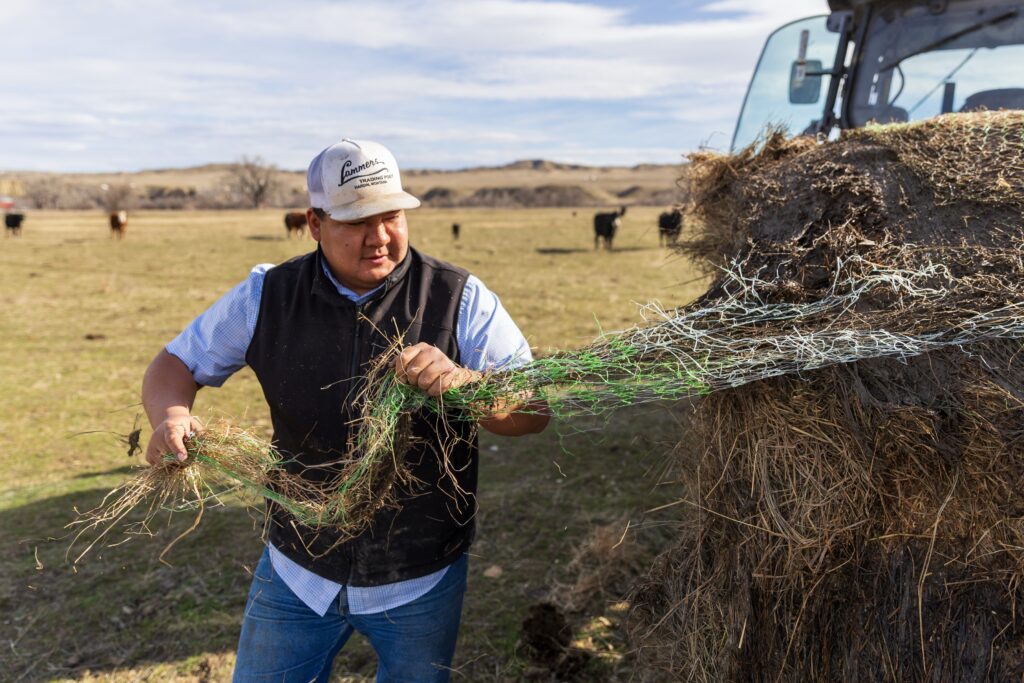
Food should not be this scarce for the tribe. The reservation sits within Montana’s Golden Triangle, a fertile region of land known for its wheat production. Although the tribe has more than 12,000 acres of farmland growing wheat and alfalfa and around 30 cattle families, little of that food was kept on the reservation for local consumption until the creation of the food sovereignty programs.
“What we are doing is not cohesive to food security, and we need to change that mentality,” Belcourt said. “That’s tough to do, it’s by design because the powers that be want us dependent. If we’re dependent we agree to take whatever comes. It’s like throwing a piece of meat to five dogs and watching them fight.”
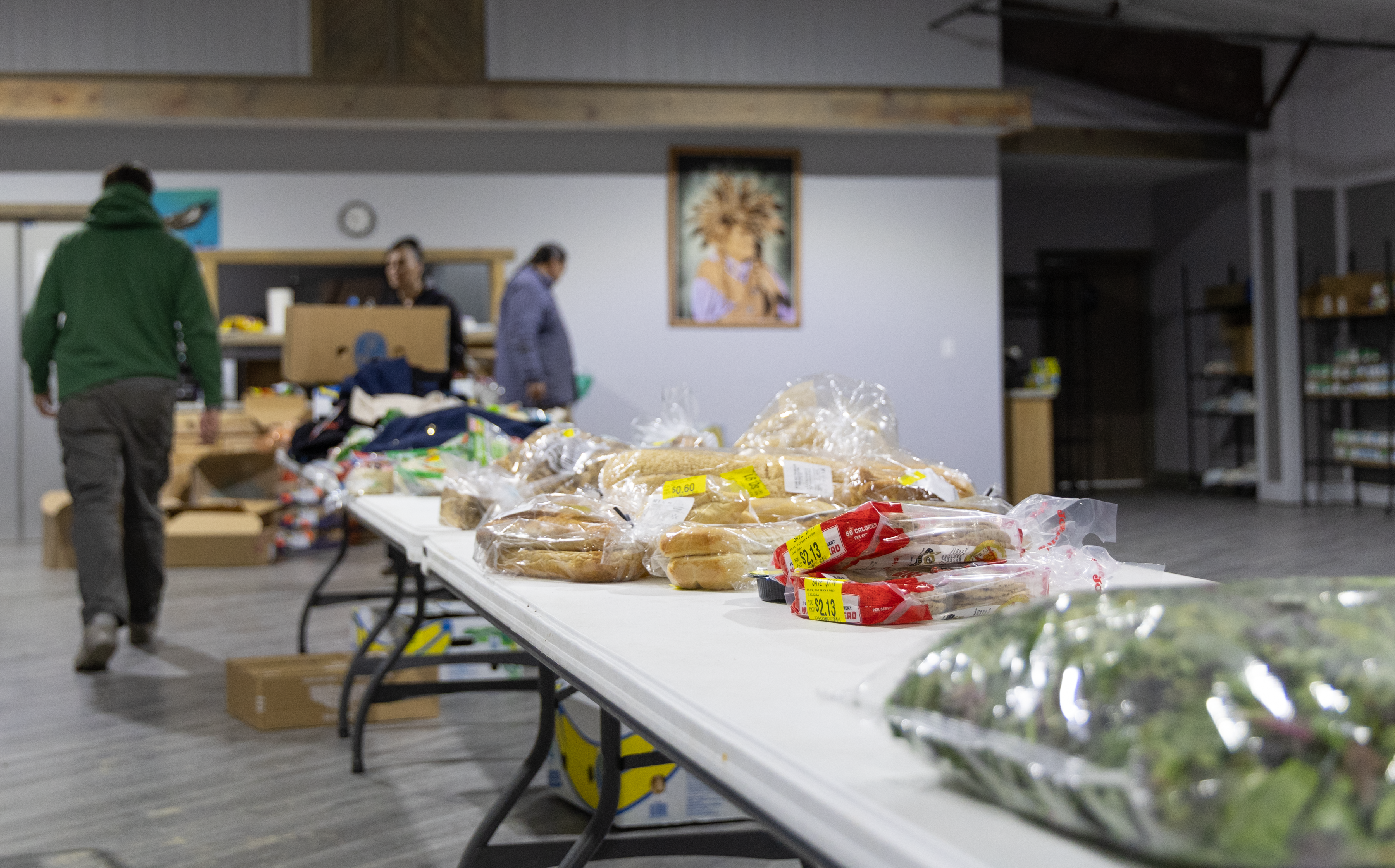
Since 2020, Belcourt has helped develop a flour mill, a community garden, a bison ranch and the Help Lodge food bank to provide healthier, more accessible food options. The projects are a part of a broader effort to build food sovereignty by restoring culturally significant foods while addressing high rates of diabetes and food insecurity on the reservation.
Enlarge
Food sovereignty is the right of tribal nations to control their own food systems, grounded in cultural traditions and protection of the natural environment, according to the Rocky Boy Food Sovereignty website. The programs aim to heal the community from historical food loss and build a sustainable local food economy through traditional foods and practices.
In March 2025, the Trump Administration cut funding to the Local Food Purchase Assistance program which provided $180,000 towards the Chippewa Cree Tribe’s Help Lodge, a tribally operated food bank on the reservation.
The food sovereignty programs started through grants from organizations such as the U.S. Department of Agriculture and donations from local groups such as the Rocky Boy Health Center and Stone Child College. Most of the programs still rely on grants because they receive no funding from the tribal government. However, this funding model doesn’t guarantee longevity.
“You live by the grant, you die by the grant,” Belcourt said. “We don’t know if we have a job in the next six months, or if funding is going to hold out. That’s why we push sustainability.”
Enlarge
Since Belcourt announced his resignation as food sustainability coordinator in early April, transitions have left specific funding amounts, including grant money for each program, unclear.
The Help Lodge was opened using Federal Coronavirus Aid, Relief, and Economic Security Act funds in 2021 to serve as the reservation’s food bank and emergency relief center. A majority of the Help Lodge funding came from the now-cut U.S. Department of Agriculture grant.
“We need some help, food sovereignty should be a priority of the tribe,” Belcourt said. “If we can’t find funding for the food bank and we’re forced to close the doors, they’re going to be at the tribal council, knocking on their door, saying ‘We’re hungry.’”
The food bank feeds around 350 people each month, but Belcourt said the loss of the grant had left the program’s future in uncertainty. As of April, the tribal council had worked with the food sovereignty team to receive funding for the Help Lodge moving forward.
About one-in-four Native Americans currently face food insecurity, compared to one-in-seven Americans overall, according to the Move for Hunger, a nonprofit based in New Jersey. Of the 28 counties in America with majority Native American populations, 18 of them face high food insecurity due to unemployment, poverty and lack of access to grocery stores due to food deserts.
“If we can’t find funding for the food bank and we’re forced to close the doors, they’re going to be at the tribal council, knocking on their door, saying ‘We’re hungry.’”
According to the U.S. Department of Agriculture, food deserts are low-income areas with limited access to grocery stores that sell healthy and affordable foods. These food deserts can often contribute to poor diet, obesity and other diet-related illnesses, such as diabetes.
Native American adults were 36% more likely than U.S. adults overall to have diabetes, according to a 2024 study by the U.S. Department of Health and Human Services.
According to Diabetes Prevention Coordinator Terrie Stump at the Rocky Boy Health Center, around 380 people on the reservation are currently diagnosed with diabetes, not including those with prediabetes. The food sovereignty programs aim to combat diabetes by providing the community with foods that are rich in fiber and low in sugar, such as the Kamut flour.
Enlarge
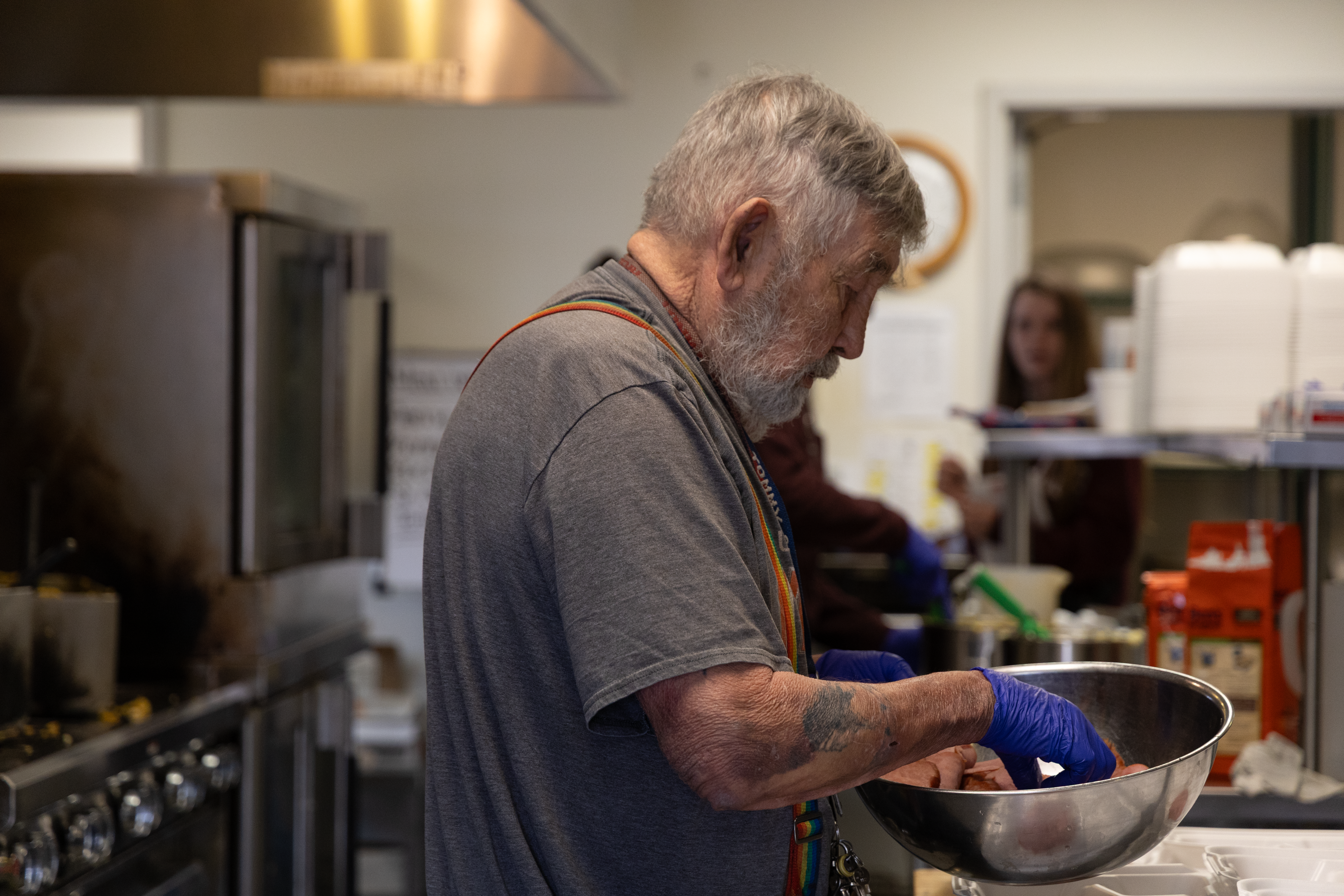
Through the Indian Health Service Produce Prescription Program, the clinic provides vouchers to around 300 tribal citizens affected by food insecurity, most with diabetes. The program focuses on access to, and education about, fresh produce in order to combat diet-related illnesses.
The vouchers allow them $100 a month per person but require that recipients attend a 16-class program, check in with their health provider and complete medical labs to evaluate health and attend scheduled dental and optometry appointments.
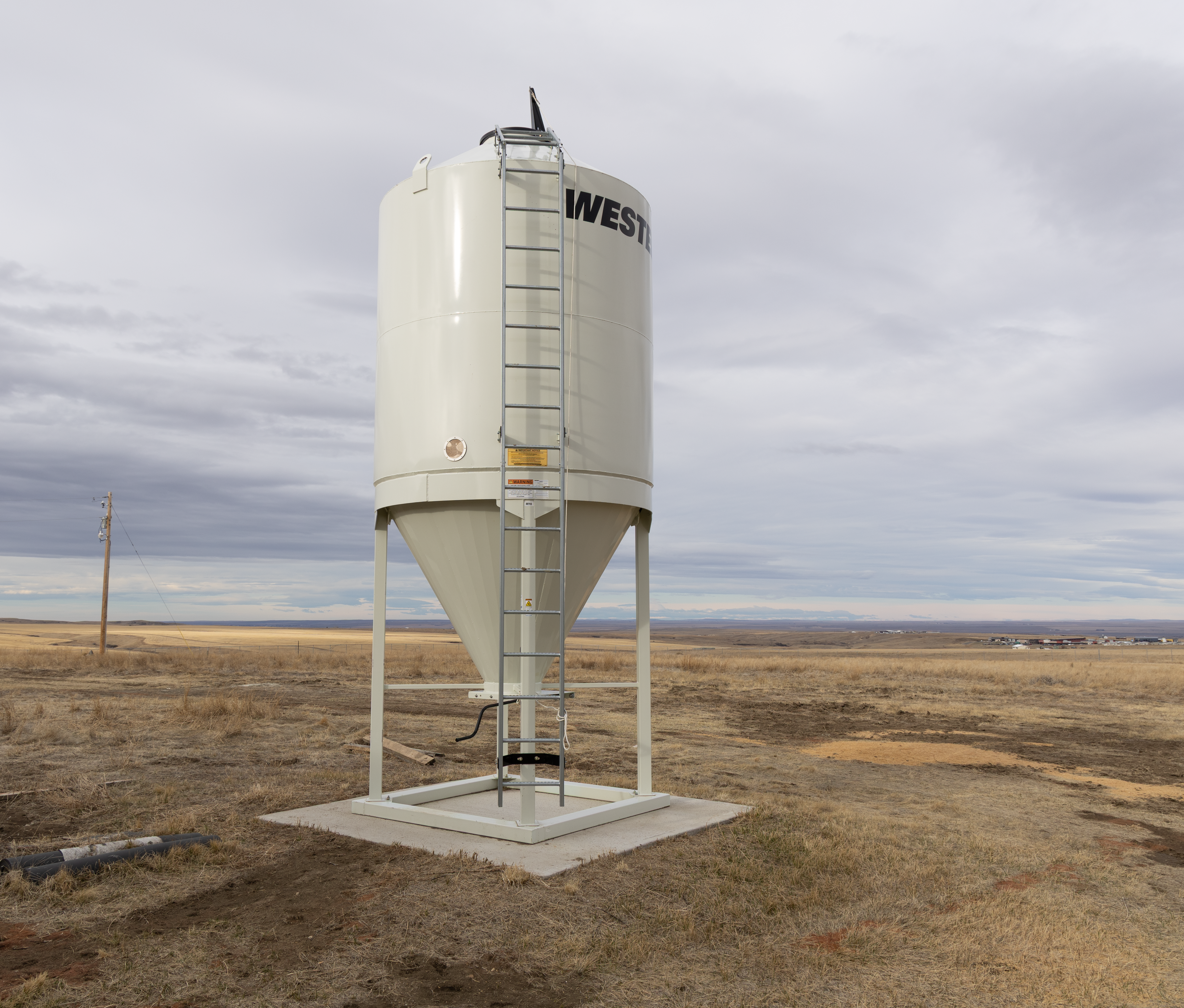
The clinic intends to further educate the younger generation through classes at the new youth facility that opened in late March. This would include introducing the community to a variety of produce, healthier recipes and teaching people what fruits and vegetables do not raise blood sugar. For instance, the program encourages people to steer away from eating potatoes, which can cause spikes in blood sugar.
Enlarge
The vouchers provide recipients access to traditional meats, such as skinless chicken, fish and bison, as well as bottled water, Kamut flour, eggs and other fruits and vegetables through Stokes Market, Grocery Store in Big Sandy and the local C & C Market that opened less than a year ago, which offers groceries, household goods and fuel.
Rising grocery prices have also increased the gap between income and food costs. In March, food prices were about 3% higher than a year previous, according to the U.S. Department of Agriculture.
Grocery prices are predicted to increase about 3.5% in 2026, according to Marketplace media outlet. Rising costs have increased the necessity and urgency for the food sovereignty programs, Belcourt said.
Enlarge
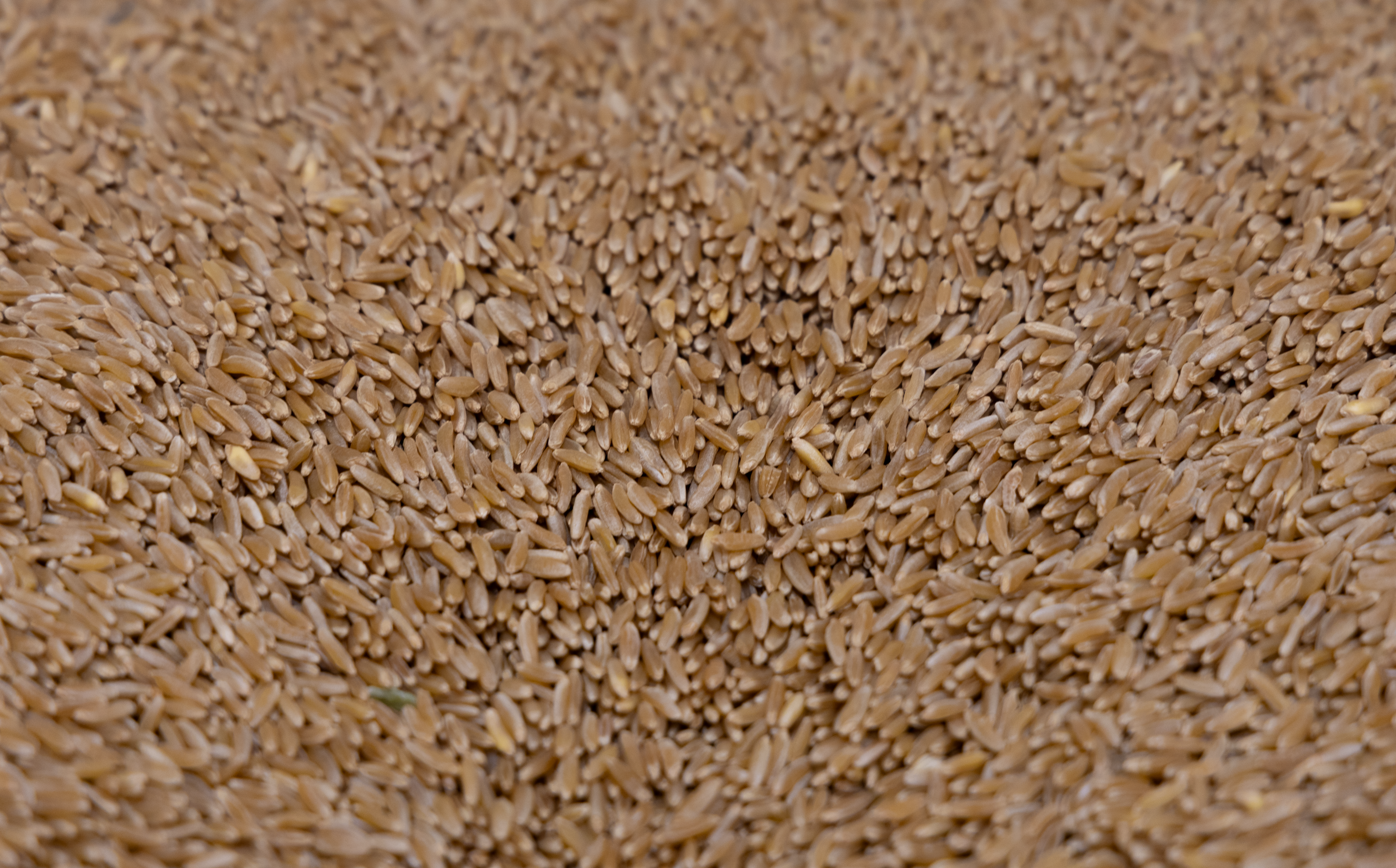
The newest of the programs is the flour mill, which began operating about three years ago. The mill processes a type of ancient grain known as Kamut, which is significantly healthier than refined white flours.
Kamut contains up to 40% more protein than modern wheat and is richer in minerals such as magnesium and zinc. Kamut also has a lower glycemic response than refined white flour, meaning that it does not cause the same blood sugar spikes, which helps prevent diabetes.
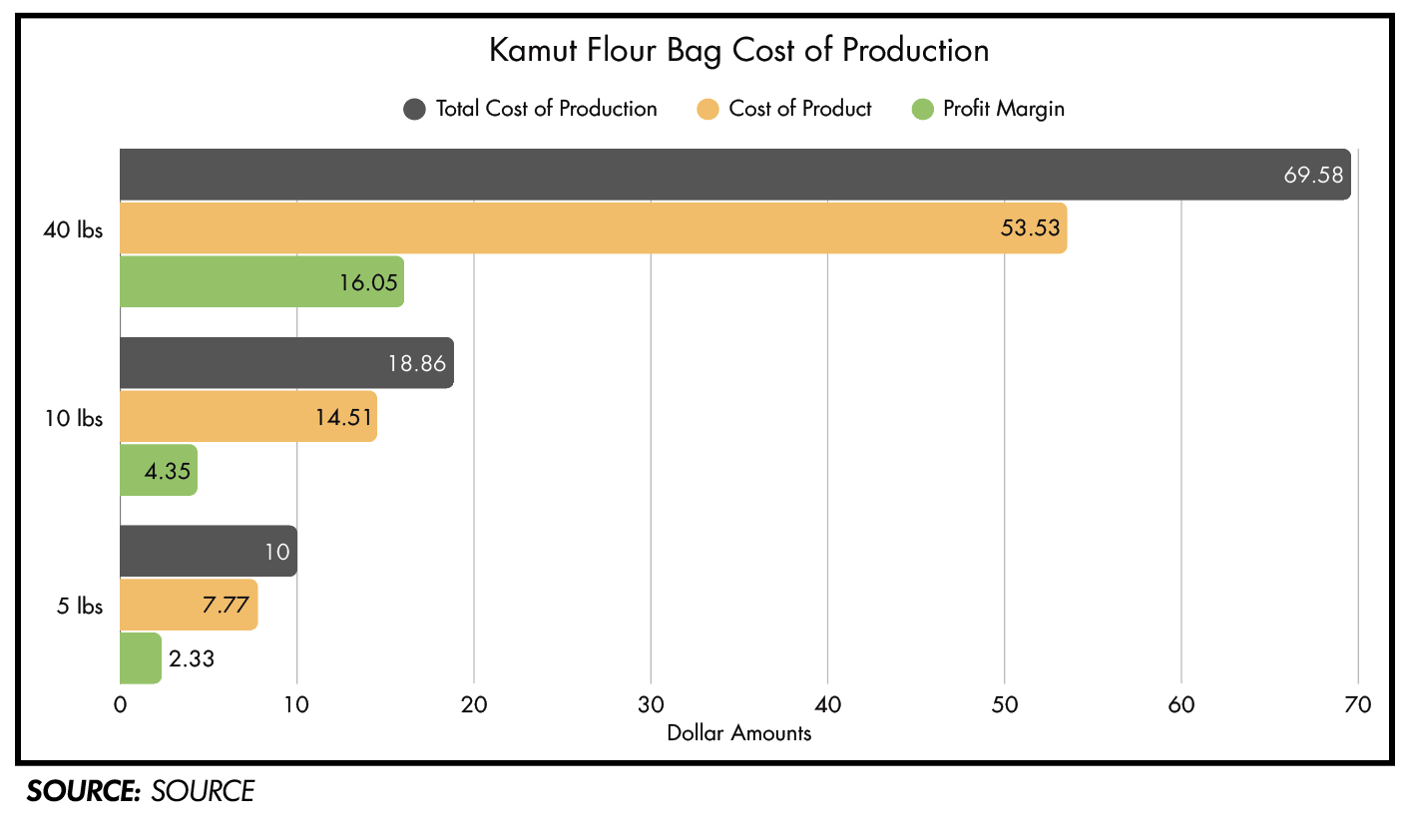
Currently, the Kamut flour is being sold in stores on Rocky Boy’s reservation and to the neighboring Fort Belknap Indian Reservation. The mill’s focus is on producing enough flour to support the local community and cover operation costs such as salaries and production. Last year, the tribe grew around 90 acres of Kamut, with plans to turn 500 acres toward organic production moving forward.
Enlarge
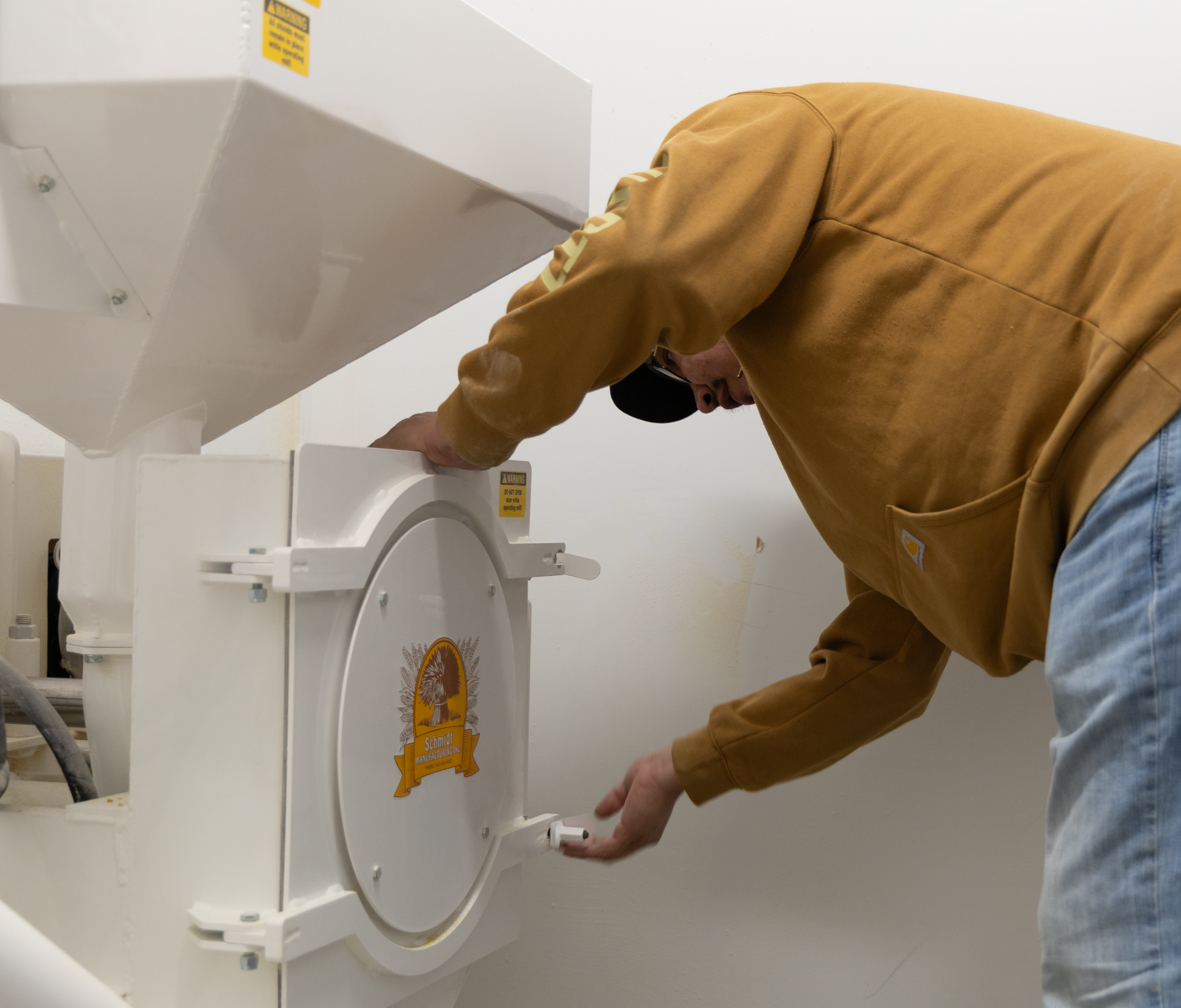
“We want to help more tribes,” said Donna Gopher, food development specialist with the Chippewa Cree Tribe. “Helping other communities by distributing some of our flour and other products to other communities is huge in helping all Native people.”
Belcourt hopes to eventually expand Kamut production in order to see their Kamut in stores across Montana. Bleached all-purpose flour typically costs around $1 per pound, while Kamut sells for about $2 per pound.
“There’s a sense of pride there, in knowing that we can produce value-added products here by our people,” Belcourt said. “The community really responds and if you set two bags of flour next to each other, our people take enough pride that they are going to buy the Kamut.”
The mill also plans to expand its utilities by adding a bakery to the Help Lodge that would produce bread and pasta using Kamut, along with developing organic safflower oil. The bakery is estimated to cost around $150,000 for startup costs and infrastructure. The tribe currently has about $30,000 to spend on bakery equipment from an Arthur M. Blank Family Foundation grant.
“Knowing that kids and families aren’t going hungry, that’s pretty amazing,” Gopher said. “When you are connected to the land and the people, what we grow and establish with the ground to feed our people is all intertwined with our heritage and culture, and how we identify as Native people.”
Enlarge
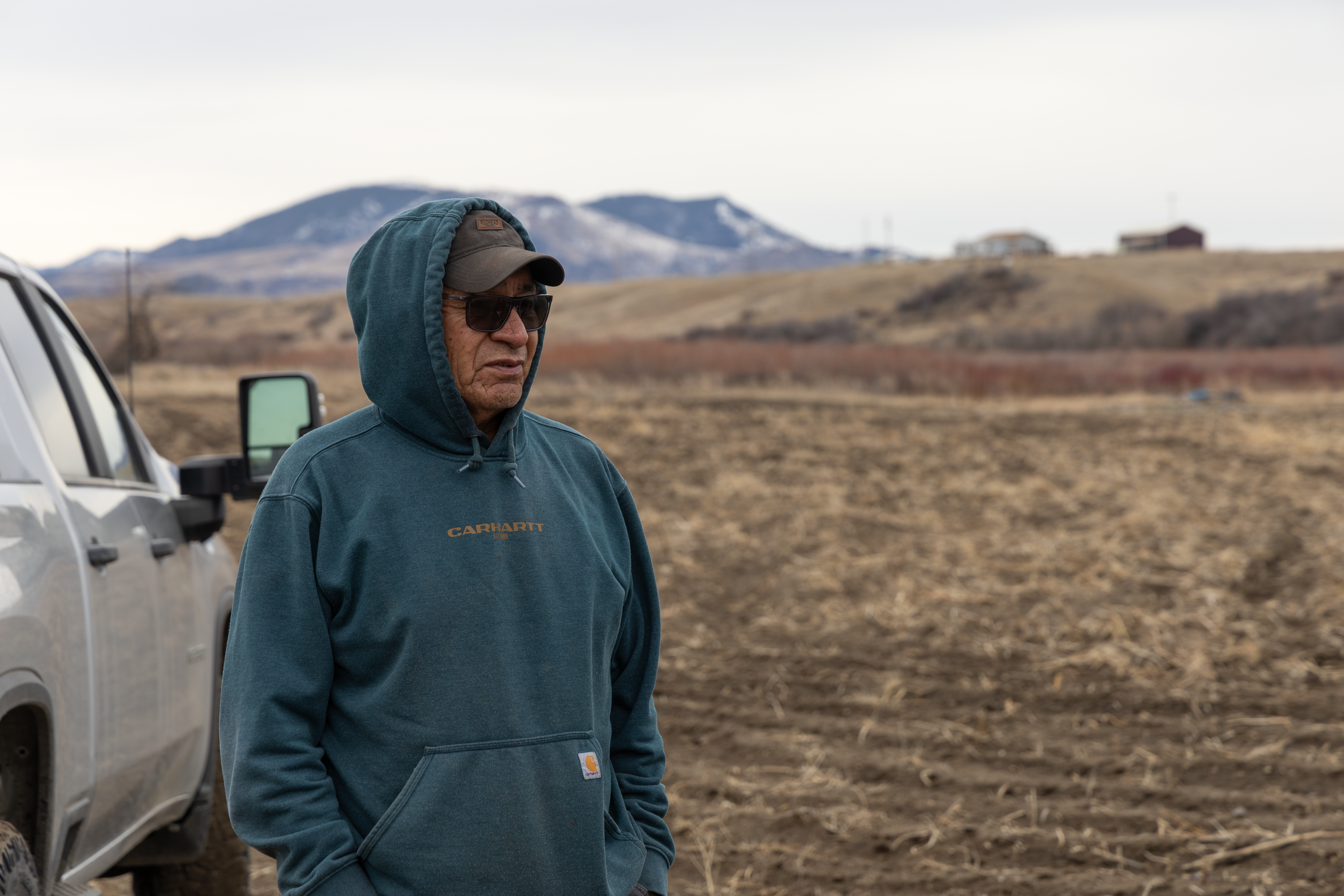
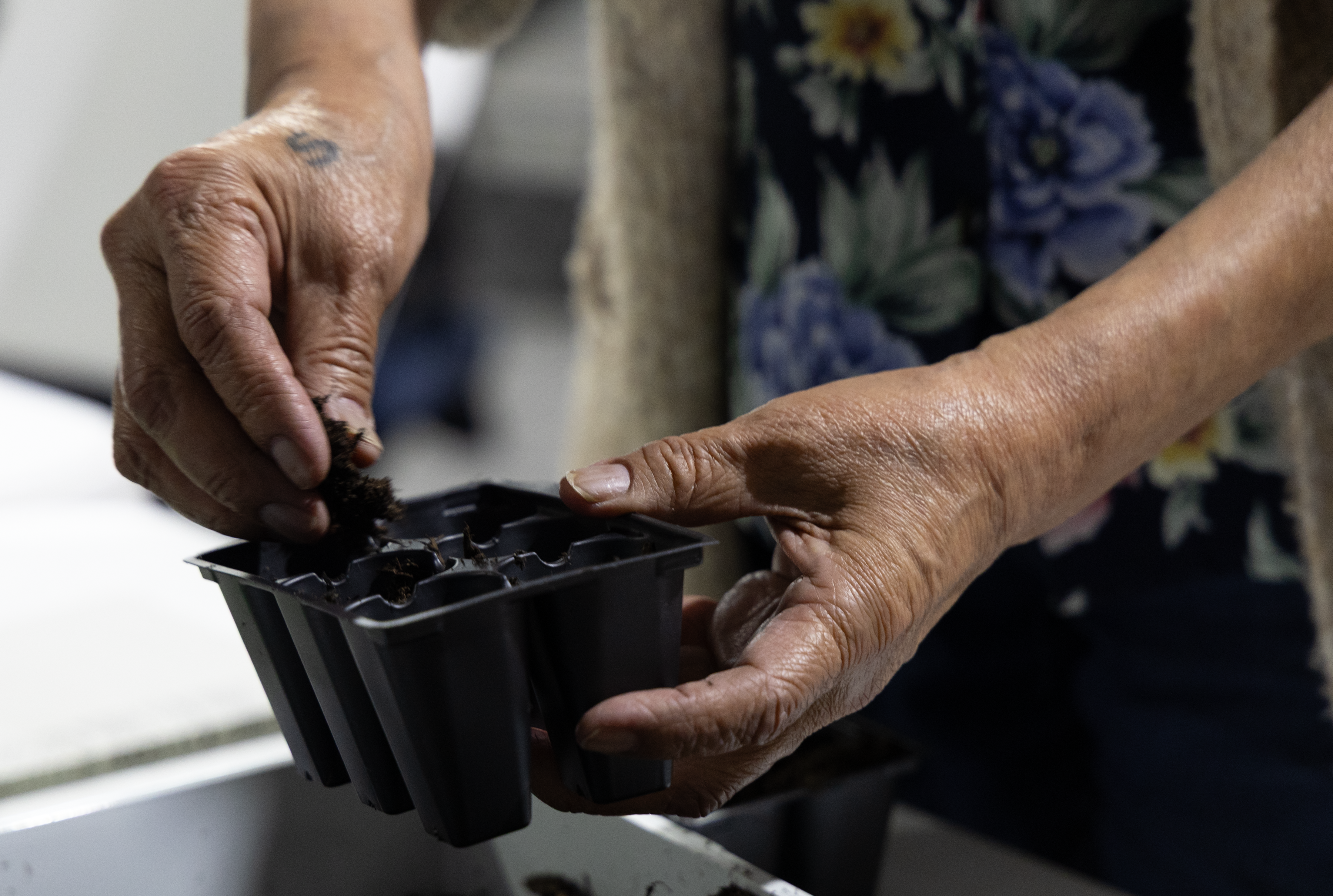
Near the Kamut fields sits the food sovereignty program’s community garden. Following the success of other programs, Belcourt approached William Lodgepole, who had been working as the tribe’s forester, around four years ago to help start the garden.
Now 70-year-old Lodgepole had little gardening experience prior to taking on the task of being garden manager, but he found the work fulfilling. Last year, he and his son tilled, grew and harvested nearly four acres of crops, mostly by themselves.
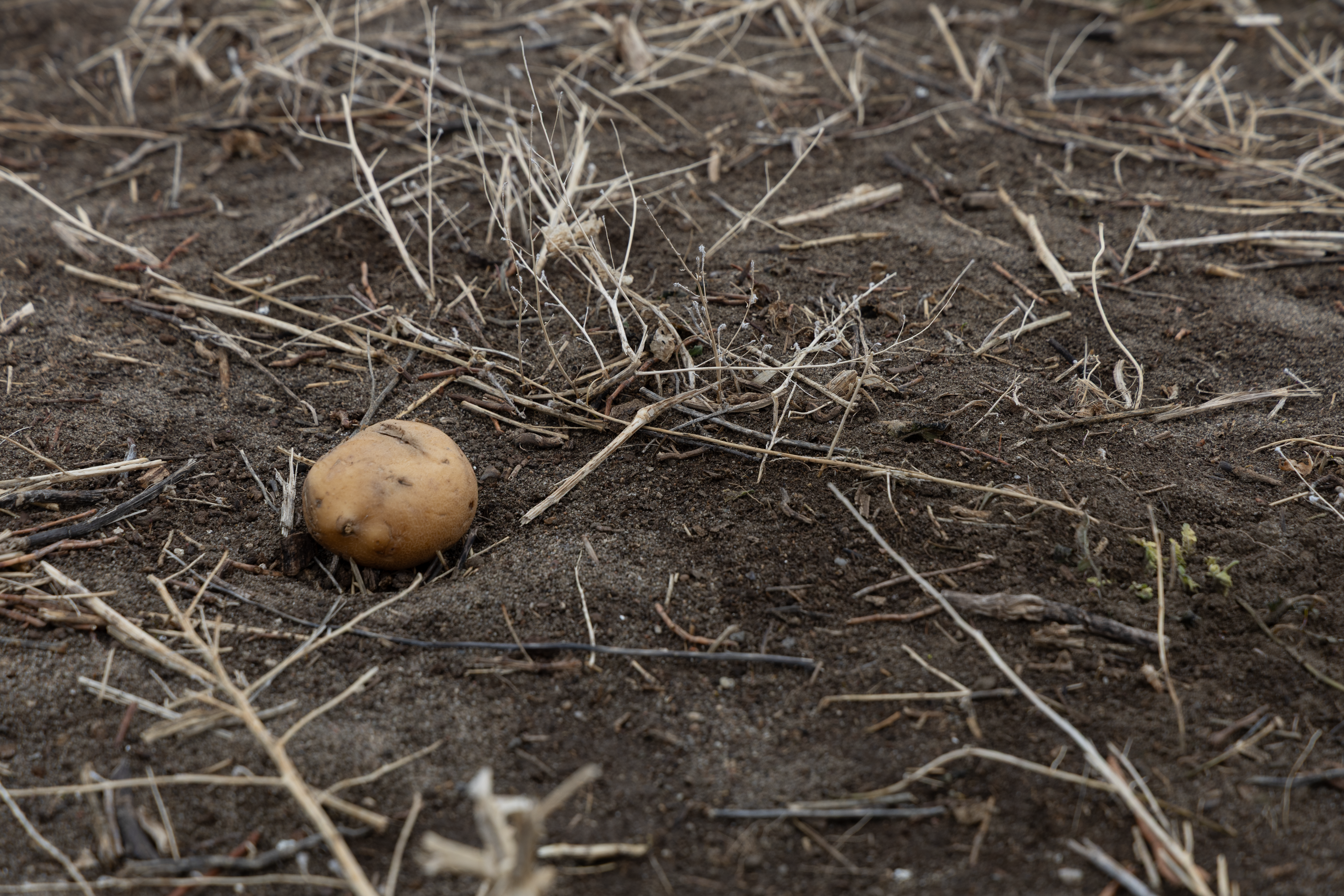
Last year, Lodgepole harvested 10,000 pounds of potatoes, selling around 2,000 pounds to the tribes on the Fort Belknap reservation. Over the course of four years, Lodgepole made around $30,000 from selling potatoes.
Lodgepole found the most success in growing potatoes because they had a potato harvester and planter and he found that they were easy to handle, although he had originally wanted to grow primarily corn.
Along with four varieties of potatoes, the garden also grew corn, onions, cucumbers and squash. Vegetables grown at the garden are stored in the root cellar for up to nine months and passed out as needed at the Help Lodge.
Enlarge
“I am hoping they will find someone who will put major effort into this project and get funding, or I don’t see it going anywhere.”
“If I win the lottery, I am going to build a big greenhouse and irrigation system and get this going year-round,” Lodgepole said. “If we had the money, labor and equipment, this would be a huge success. We could feed the whole reservation.”
Due to limited manpower and funding, Lodgepole decided to step away from his role as garden manager in early March. There is currently nobody lined up to take his position.
“If I had the funding I would have stuck it out,” Lodgepole said. “I am hoping they will find someone who will put major effort into this project and get funding, or I don’t see it going anywhere.”
Lodgepole hopes to continue volunteering with the garden in the future and that grant funding will eventually be acquired for an irrigation system and small tractor.
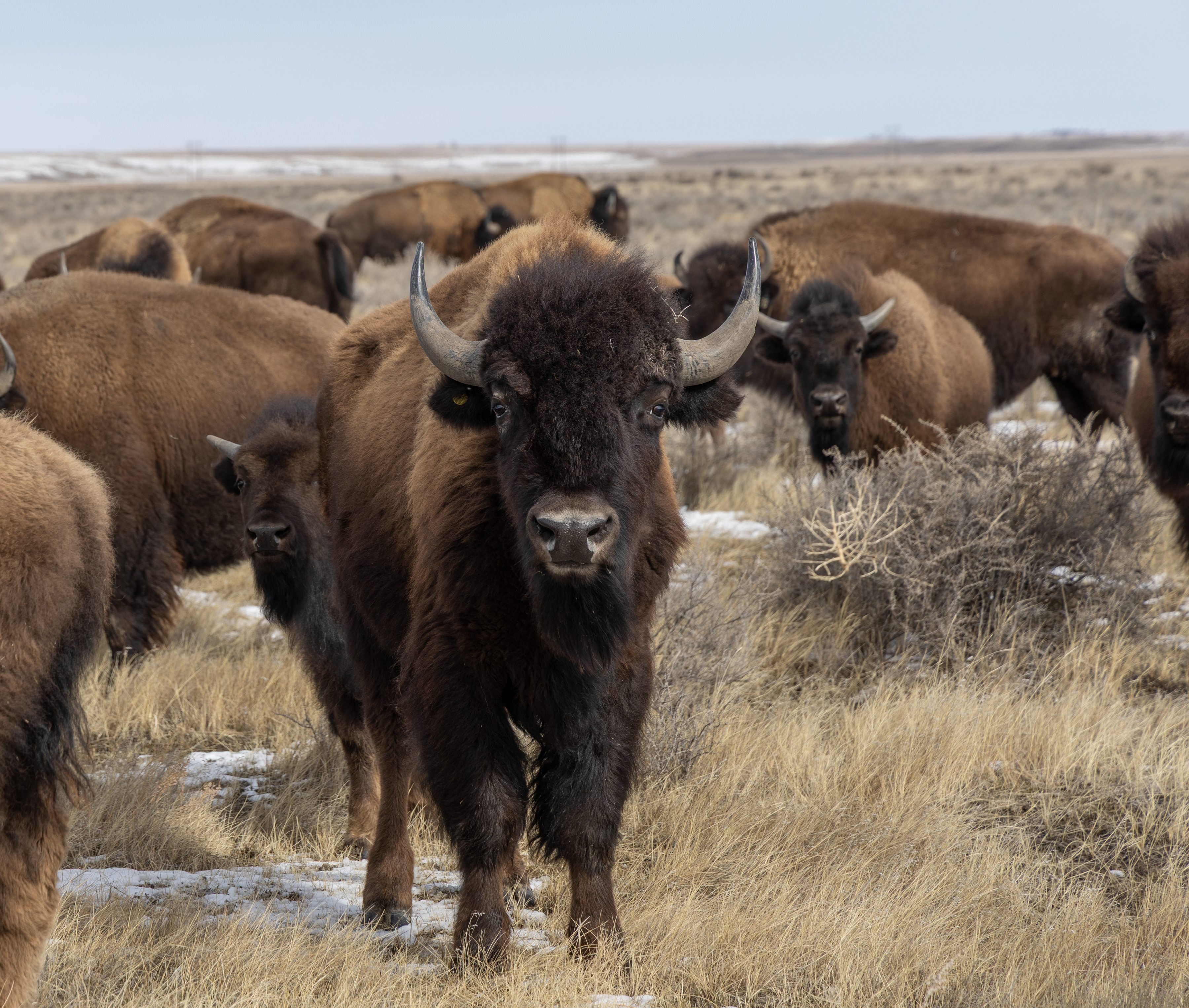
Along with vegetables from the garden, the Help Lodge also provides tribal citizens with access to bison meat from the Buffalo Child Ranch, Rocky Boy Buffalo Project. The meat is also sold at the C & C store and distributed to schools and other food programs.
Enlarge
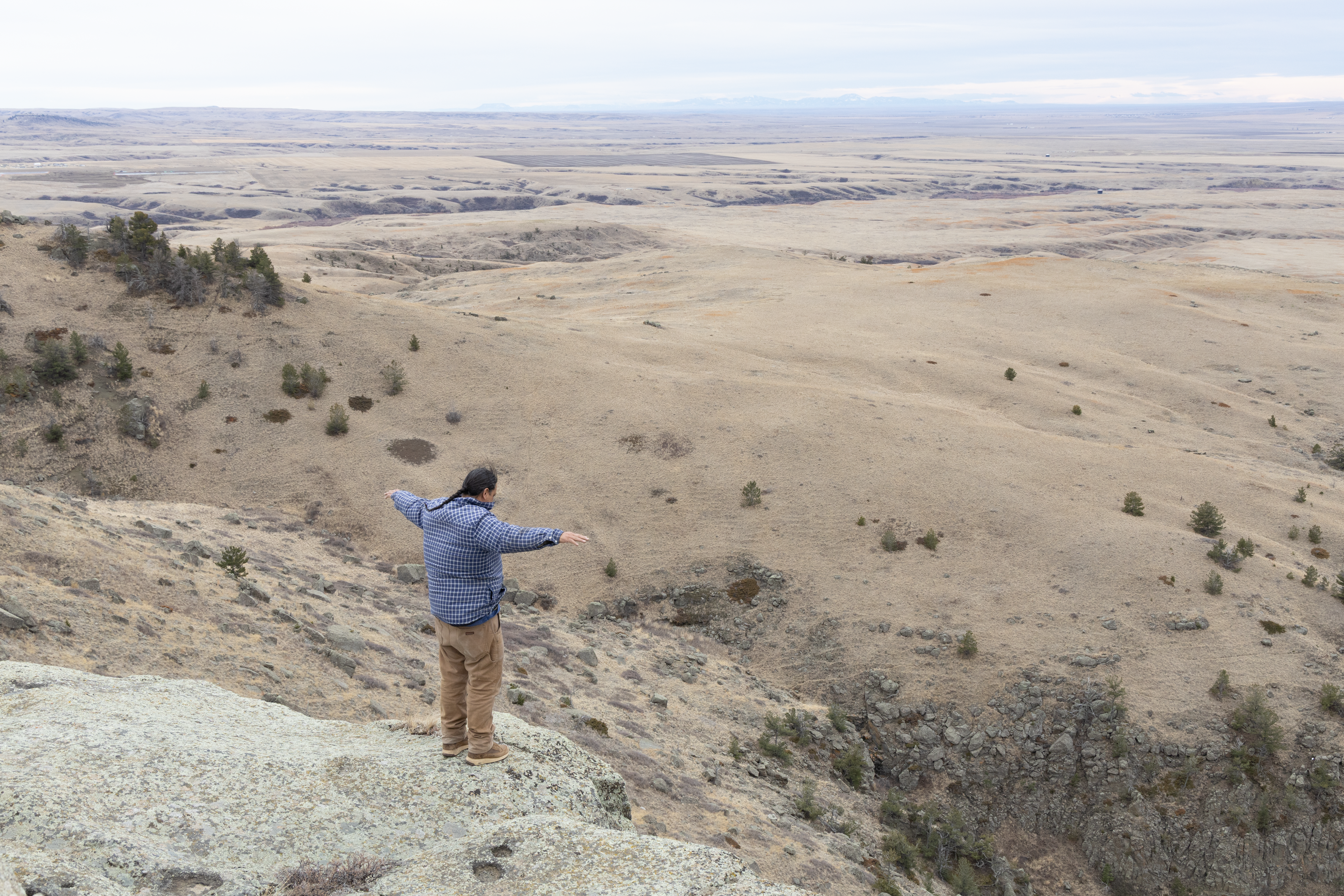
Bison meat is a healthier alternative to beef, as it is higher in protein and contains less fat.
“Buffalo has been a significant animal for us,” Belcourt said. “It’s been missing from our diet forever, so we’re happy to bring that back and get it reintroduced.”
Before the creation of the program, bison had not been on Rocky Boy’s reservation for nearly 30 years. When the project was started in 2021, the program held nine bison, and it has now grown to around 60 which are housed on about 1,300 acres.
The bison program was the first food sovereignty program Belcourt started using grants from the First Nations Development Institute, the InterTribal Buffalo Council, the National Fish and Wildlife Foundation and the World Wildlife Fund.
The current Buffalo Ranch Manager, Theron Oats, has worked with the program for three years. The bison management team is developing a five-year goal to expand to 700 bison across 70,000 acres of land while becoming self-sufficient and reducing reliance on grants.
Expansion also includes a $200,000 visitors center to continue facilitating tours, a processing plant and an equipment building.
“Younger ones getting to experience being a part of something of cultural significance, it gives the youth a sense of identity ”
The bison project focuses heavily on establishing connections with tribal citizens by inviting people, including local students, to harvest.
“Younger ones getting to experience being a part of something of cultural significance, it gives the youth a sense of identity,” Oats said.
Middle school students were invited to help harvest the bison last year for a meal at the school during Native American week, while third and fourth graders were sent to harvest potatoes at the community garden.
Currently, according to Food Service Supervisor at Rocky Boy Schools, Lori Osgood, they are only able to provide bison meat in school lunches a few times a year due to cost.
Rocky Boy Schools provides access to free breakfasts and lunches during the school week under the Community Eligibility Provision. The program provides no-cost meal options to schools and school districts in low-income areas, according to the U.S. Department of Agriculture.
“If they don’t eat we notice that they’re on edge and they don’t learn as well,” Osgood said. “But food is expensive, and it’s even more expensive to eat healthy.”
Rocky Boy Schools run on a four-day school week, meaning that without the No Kid Hungry support bags, many students would be left without meals over the long weekends.
“One family, when they moved here, didn’t even have running water, so they weren’t able to bathe or cook food,” Osgood said. “The student in her class was hungry all the time and would come up and ask for more food. We’re not supposed to do that, but how do you tell a teacher who knows that they’re going to feed a kid that we have a limit? We have to help.”
This summer, Osgood hopes to expand the program’s summer food program to provide meals to children.
Enlarge
In 2024, the bison program bought a $129,000 refrigerated mobile slaughter unit through grant funding. The team is now working on a Hazard Analysis Critical Control Point plan in order to get approved by the U.S. Department of Agriculture to get bison regularly into the schools and backpack programs.
With approval, any bison meat from the project will be able to go anywhere, including outside of Montana which would bring revenue back for the program.
Last year, the bison had 14 calves and Oats and his team hope to see around that number again this year.
“The generations before us didn’t have that connection,” said Wyatt Caplette, vice president of the Buffalo Board. “It’s really exciting that we are able to rekindle that.”
Caplette started working with the bison program full-time in 2024 and hopes to eventually take over as head of the project.
Caplette originally got involved with the bison project through a Smithsonian internship program that sends college students from Fort Peck, Fort Belknap, Rocky Boy’s and Blackfeet to monitor ecosystem data of each of the bison programs.
This summer, Caplette will travel to Washington D.C. with other members of the team for the grand opening of a new Smithsonian exhibit that focuses on the American bison and will feature the Rocky Boy Buffalo Project.
The food sovereignty team has applied for 11 operational grants since the beginning of 2026, and has received a few of them for project specific needs and salary costs across programs.
The biggest grant the food sovereignty programs team has applied for is in the amount of $1.4 million from the World WildLife Fund, a foundation which aims to conserve and support biodiversity and sustainable use of natural resources. The grant would be used to support the bison program.
The food sovereignty team recently created a five-year plan regarding the self-sustainability of the Buffalo Child Ranch. The project is expected to cost around $1.5 million each year, but should be sustainable for the next three years with the current income and funding. Moving forward, the team hopes to create similar plans for the other programs.
“It can’t happen fast enough with the buffalo, it can’t happen fast enough with the value-added products,” Belcourt said. “What we eat, we should grow here and what we grow, we should eat here.”
Enlarge
A SPECIAL PROJECT BY THE UNIVERSITY OF MONTANA SCHOOL OF JOURNALISM
ADDITIONAL FUNDING SUPPORT FROM THE GREATER MONTANA FOUNDATION
READ MORE:
Previous
Race to Represent