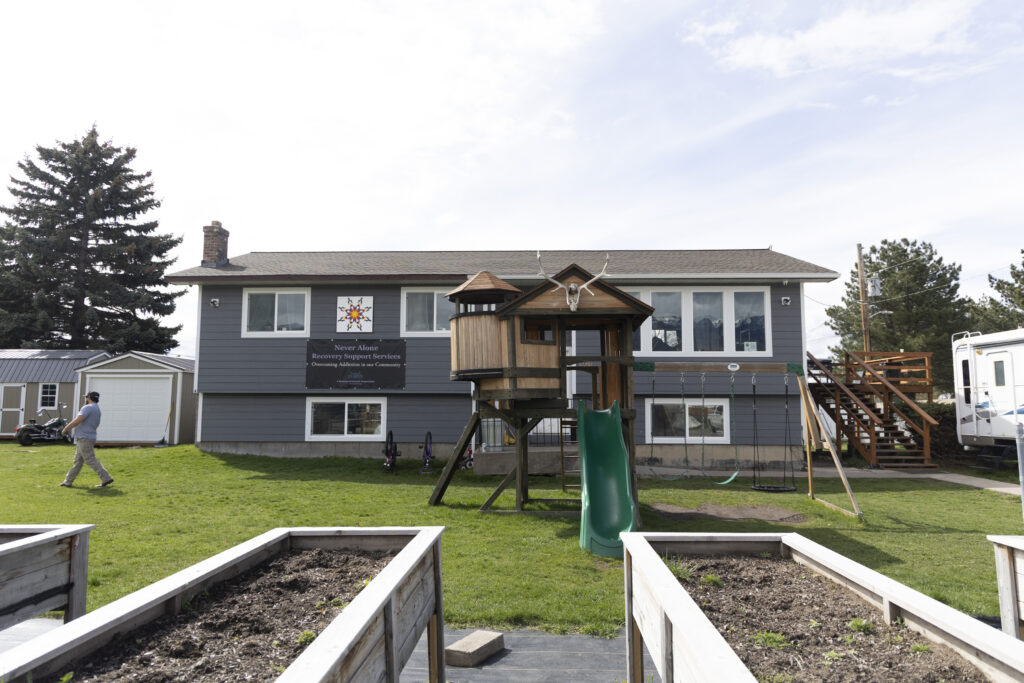
On the border
The bonds of the Siksikaitsitapi tribes have always existed outside physical borders. Federal policy has threatened those ties.
Story by Claire Bernard | Photos by Emma Mcdowell
It was calving season on the Blackfeet Indian Reservation when the tractor’s wheel broke. It was also one of the busiest times of the year, and Jonathan St. Goddard needed a replacement. Fast.
The only available part was 500 miles away in Saskatchewan. St. Goddard headed to Canada to make the $1,250 purchase. Re-entering the U.S. through a border checkpoint should have been simple, as it always had been. St. Goddard should have declared his $1,250 purchase and drove home. But for the first time, he couldn’t simply cross into the U.S.
Instead, the border agent questioned St. Goddard. Why was he in Canada? Where was the receipt for his purchase? It was March 2025, still the early days of President Donald Trump’s second term, when attention was focused on border security and international tariffs on incoming goods.
The border patrol took his invoice and began to punch numbers into a computer.
“You owe a tariff,” the agent told St. Goddard. “It’s $308.”
St. Goddard was confused. He thought tariffs hadn’t started yet and even if they had, the border agent had only explained it was a 25% tariff but not on what or how he got to the amount he was charged.
Enlarge

St. Goddard paid, but as he drove off, he began to feel frustrated. St. Goddard works on a narrow budget and receiving an extra charge every time he needed an item from Canada was never part of the plan.
“If tariffs continue, the cost from the tariffs will cause irreparable harm to our family’s ranch and agricultural business,” St. Goddard wrote in a later affidavit.
Nearly a year later, St. Goddard found himself in a similar position: In the middle of calving season, with a broken piece of equipment, and no place to get a replacement except Canada. But this time, he was hesitant about crossing.
He isn’t the only member of the Blackfoot Confederacy whose life is changing due to federal decisions.
Since President Trump’s re-election, his nationalist trade approach, alongside escalating federal border and immigration policies, has greatly impacted the Blackfoot Confederacy and Siksikaitsitapi people’s relationship to the border. Taxation on goods that violate treaty rights, increased scrutiny over documentation and fear of crossing into the U.S. due to Immigration and Customs Enforcement, or ICE, presence have hurt businesses, familial ties and ceremonial events.
As a sovereign nation with a treaty-based relationship with federal governments, the Siksikaitsitapi people have used their unique political identities to assert their rights. The efforts have unfolded on both sides of the border, with lawsuits filed, documentation made more accessible and interactions with federal agents being prepared for.
Enlarge

As a member of the Aamskapi Pikuni, Blackfeet Nation, St. Goddard’s family has traded and traveled across the 49th Parallel that divides the traditional lands of the Siksikaitsitapi people for thousands of years, long before the U.S. established itself as a nation and put up a border to divide itself from Canada.
And as a fifth-generation rancher on the reservation, St. Goddard knows he’s at the whim of an ever-shifting federal government. Most of the land St. Goddard’s cattle graze on is owned by the tribe, and he conducts his work through the U.S. Department of Agriculture, which is overseen by a presidentially appointed secretary, currently Brooke Rollins.
But with federal changes coming fast and frequent, St. Goddard and other members of the Aamskapi Pikuni tribe have felt the impacts trickle down from Washington D.C. to their small Montana town.
Along the 49th parallel
After St. Goddard left the border checkpoint last spring, he joined a lawsuit that argued by imposing tariffs on tribal members, Trump had violated the 232-year-old Jay Treaty, which exempted Indigenous peoples from paying duties when crossing the border.
Before the case could move much further, the U.S. Supreme Court struck down many of Trump’s tariffs and in February, St. Goddard’s case was dismissed for lack of jurisdiction. But the legal basis for the case — the treaty — has remained relevant for more reasons than one.
Enlarge
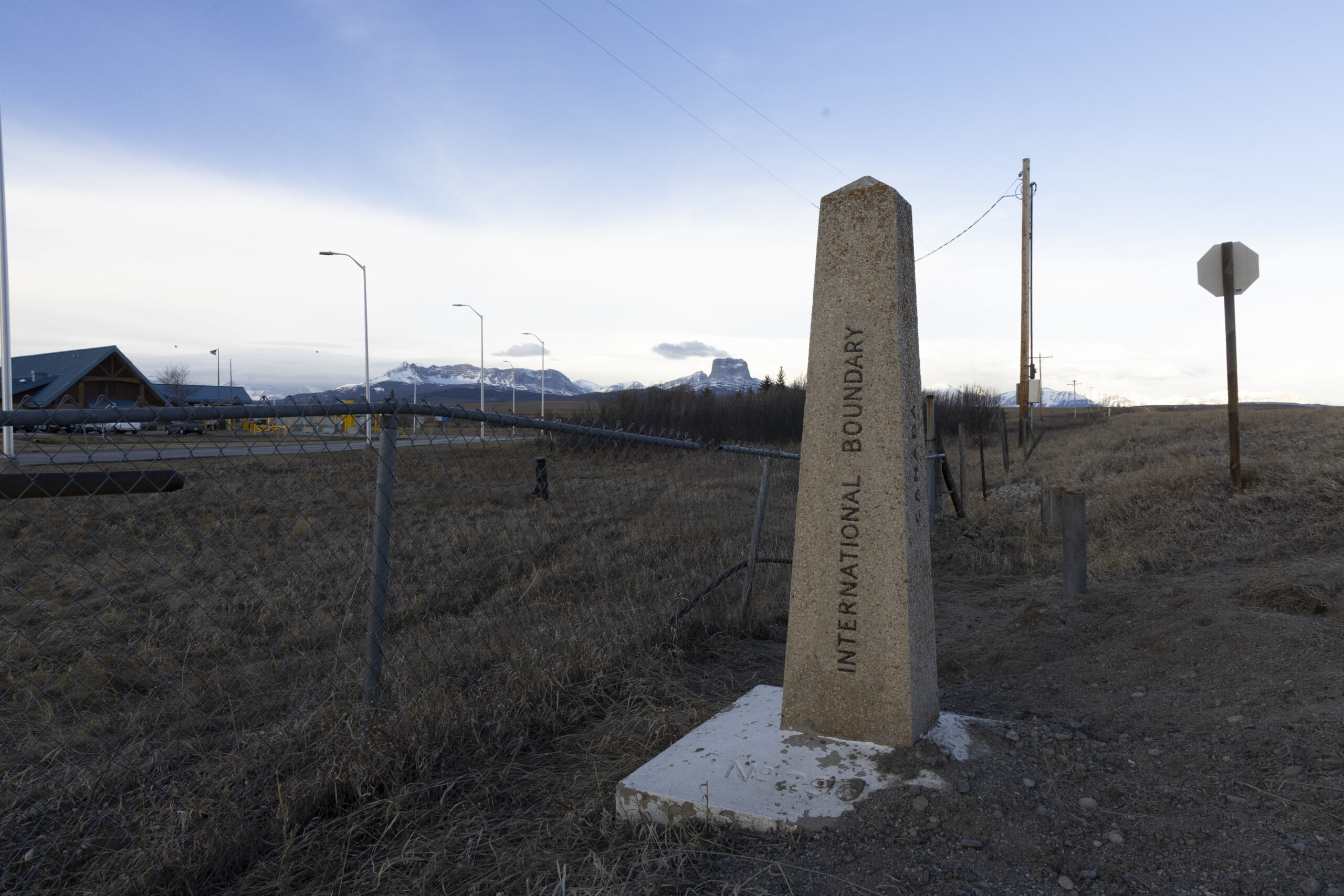
After the Revolutionary War, the Jay Treaty was signed in 1794 to settle remaining disputes between the U.S. and British colonies in today’s Canada. It included provisions about Indigenous peoples’ right to freely cross the newly established border lands as well as trade protections.
A few decades later, the 49th Parallel was established as the official border between the U.S. and Canada. But it didn’t just slice the two countries.
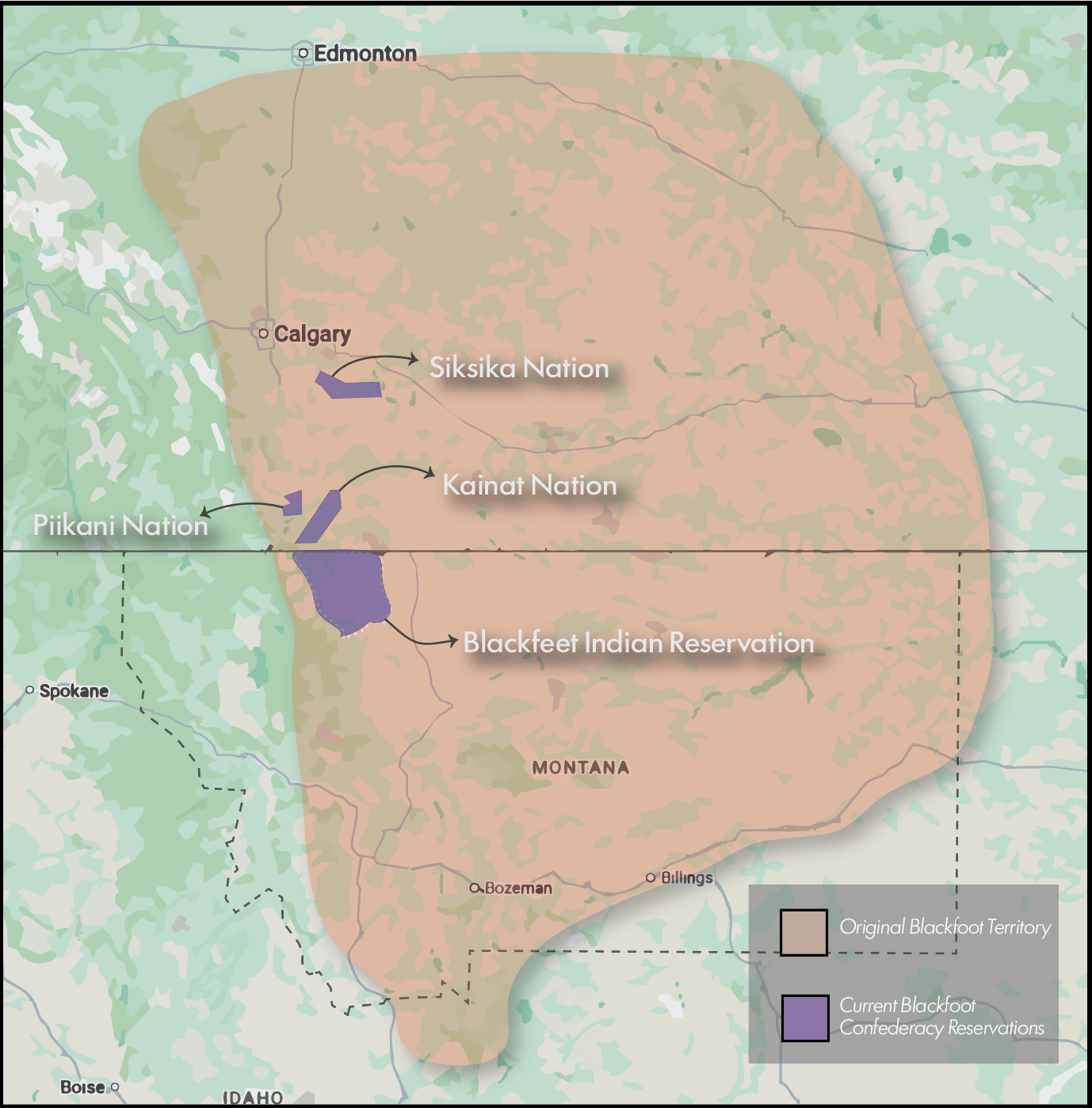
It directly split up the Siksikaitsitapi. Three bands remained on the Canadian side: the Kainai (Blood), Siksika (Blackfoot) and Piikani (North Peigan) nations.
For the southern Aamskapi Pikuni tribe, this meant weathering hundreds of years of oppression and abuse at the hands of the U.S. government, which included misleading treaties and reorganization acts, forced assimilation and land loss, rationing and neglect, among other atrocities.
Enlarge

The other bands on the northern side of the border also suffered generational impacts of colonization by Great Britain and eventually Canada. As one confederacy, the four bands share more commonalities than differences. They speak the same languages, practice the same ceremonies and share the same families.
But the treaty-based relationships the tribes developed with their federal governments separated the Aamskapi Pikuni from the rest of the Siksikaitsitapi. And the border has become a sour physical reminder of this splinter.
Enlarge
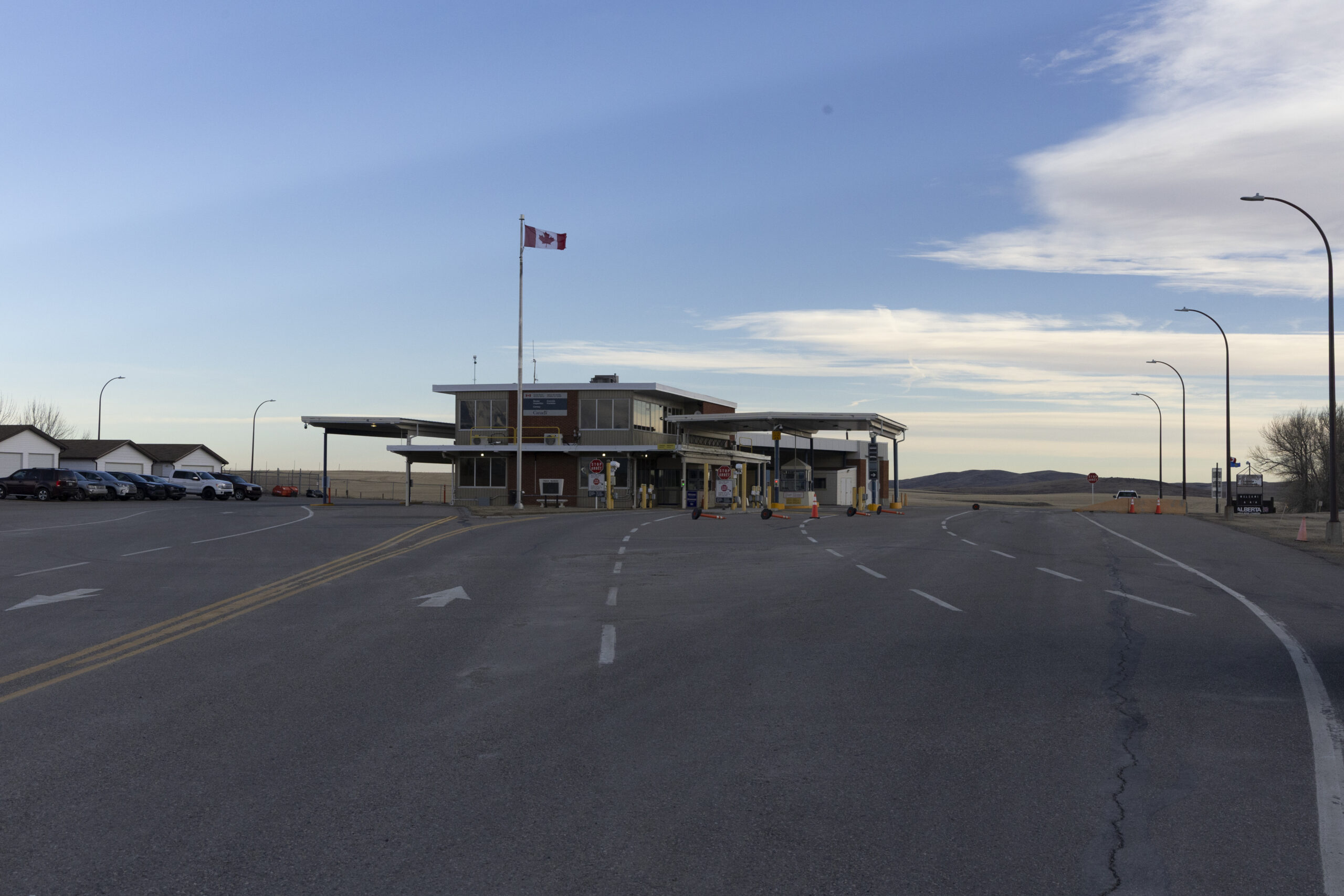
Under the Jay Treaty, Indigenous Canadians and Native Americans have a guaranteed right to cross the U.S.-Canada border with their tribal identification cards, no passports needed.
But now, fear has seeped into this right as inspections increase. The border crossings have evolved from symbols of impediment on Indigenous land to embodiments of the current U.S. federal government’s escalating anti-immigrant rhetoric. A rhetoric that many in Browning say targets those with brown skin.
Many tribal members say there’s usually an unease when crossing. There’s always been the questions. The scrutiny of their tribal IDs. The misunderstandings of what ceremony means. But the tactics have changed, the way immigration enforcement in the U.S. has moved from detainment to deportation to lethal force.
It’s these changes that have laid the heaviest on the shoulders of the Siksikaitsitapi people living in Canada, cloaking them in fear and uncertainty. And without the confidence to enter into the U.S., the presence of brother and sister tribal members has been greatly missed.
‘Fighting for 18,000 years’
Enlarge
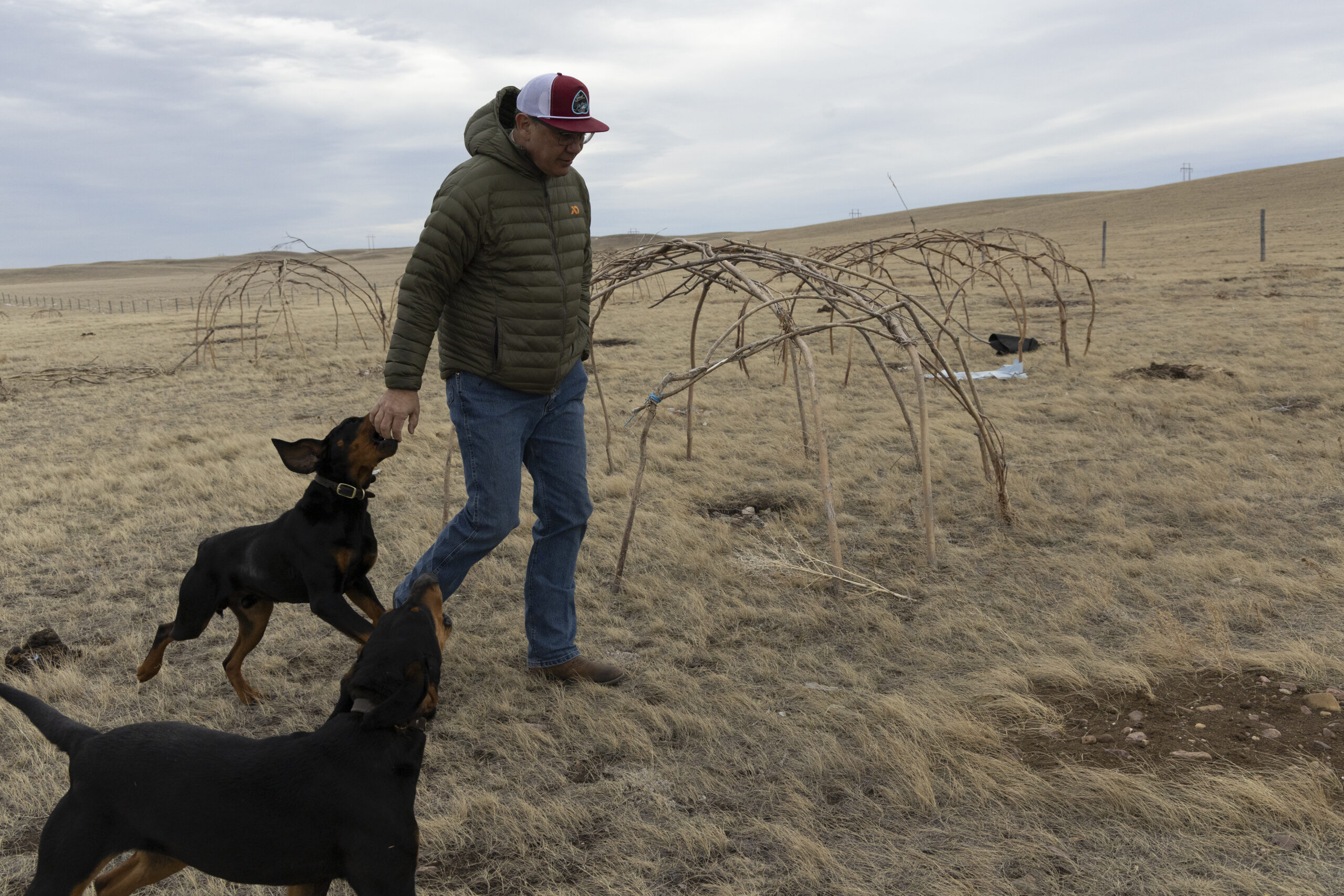
As Rep. Tyson Running Wolf walked across his yard, the wooden skeletons of dozens of former sweat lodges surrounded him.
“I’ve built hundreds of these,” Running Wolf (D-Browning) said, “one for each time ceremony happens.”
Pulling barbed wire fencing off the ground, Running Wolf revealed an aged stone circle. Here, teepees were erected for centuries.
As a member of the Horn Society, Running Wolf has held traditional bundle opening ceremonies on his land for years. The location matters, Running Wolf said, as well as the people, the timing and the items that are used, often medicines, feathers or pipes, among other spiritually significant objects. While Tyson Running Wolf and his wife, Lona Running Wolf, are both bundle holders, they haven’t become transferred ceremonial elders — a process that takes years of learning through oral tradition from current elders.
Most of these elders come from Canada, as many bundles were smuggled to the north during the sweeping suppression from the late 1800s to the 1970s of Indigenous religious, spiritual and traditional practices by the U.S. government. While similar policies were enacted in Canada, Lona Running Wolf said, the three Canadian bands of the Siksikaitsitapi were able to pass down traditional ceremonial practices and their native language in greater numbers.
This was due, in part, to the establishment of a reserve for the Canadian bands in 1877 by the Canadian government which gave the tribes space to hunt and raise cattle, alongside supplementary government rationing. The southern tribe, alternatively, saw their main food source, bison, decimated and measly government rations led to starvation of hundreds of Aamskapi Pikuni while more white Americans poured into the region.
Enlarge

This led to a knowledge vacuum for the U.S. tribe, with Tyson Running Wolf estimating that there are only about 10 to 15 Aamskapi Pikuni transferred ceremonial elders in Browning versus hundreds in Canada.
Last time the Running Wolfs had a medicine pipe bundle opening, close to 100 people traveled for the ceremony, with almost half coming from Canada.
In July, the Akao’katsin ceremony — a nearly week-long circle camp that reunites the bands of the Siksikaitsitapi — will take place. But there’s worry that the fear of detainment or harassment from U.S. agents will prevent those living in Canada from visiting. Last year already saw lower attendance because of this, Tyson Running Wolf said.
Fears began ramping up after immigration enforcement across the U.S. did, Tyson Running Wolf said — including in western Montana where Customs and Border Protection claimed in December that it made 51 arrests, with 41 of those being of “individuals in violation of immigration law.”
While Tyson Running Wolf said he hasn’t heard of any Niitsítapi people being detained or deported, the Assembly of First Nations issued a travel advisory for the U.S. in February, warning First Nations Canadians about crossing the border and noting it had received reports of Indigenous Canadians experiencing increased scrutiny and detainment by ICE.
The Siksikaitsitapi issued its own warnings, reminding tribal members about their rights under the Jay Treaty and urging them to keep copies of their citizenship, blood quantum or certificates of Indian status on hand at all times.
A spokesperson for U.S. Customs and Border Protection said in a statement that American Indians born in Canada can freely enter the U.S. if they can prove at border crossings at least 50% American Indian blood. This requires proof of Canadian citizenship, Indigenous status and blood quantum, a colonial concept that refers to how much “Native blood” an individual has.
“Protection officers may request additional evidence if what is presented is unclear,” the statement continues.
Enlarge
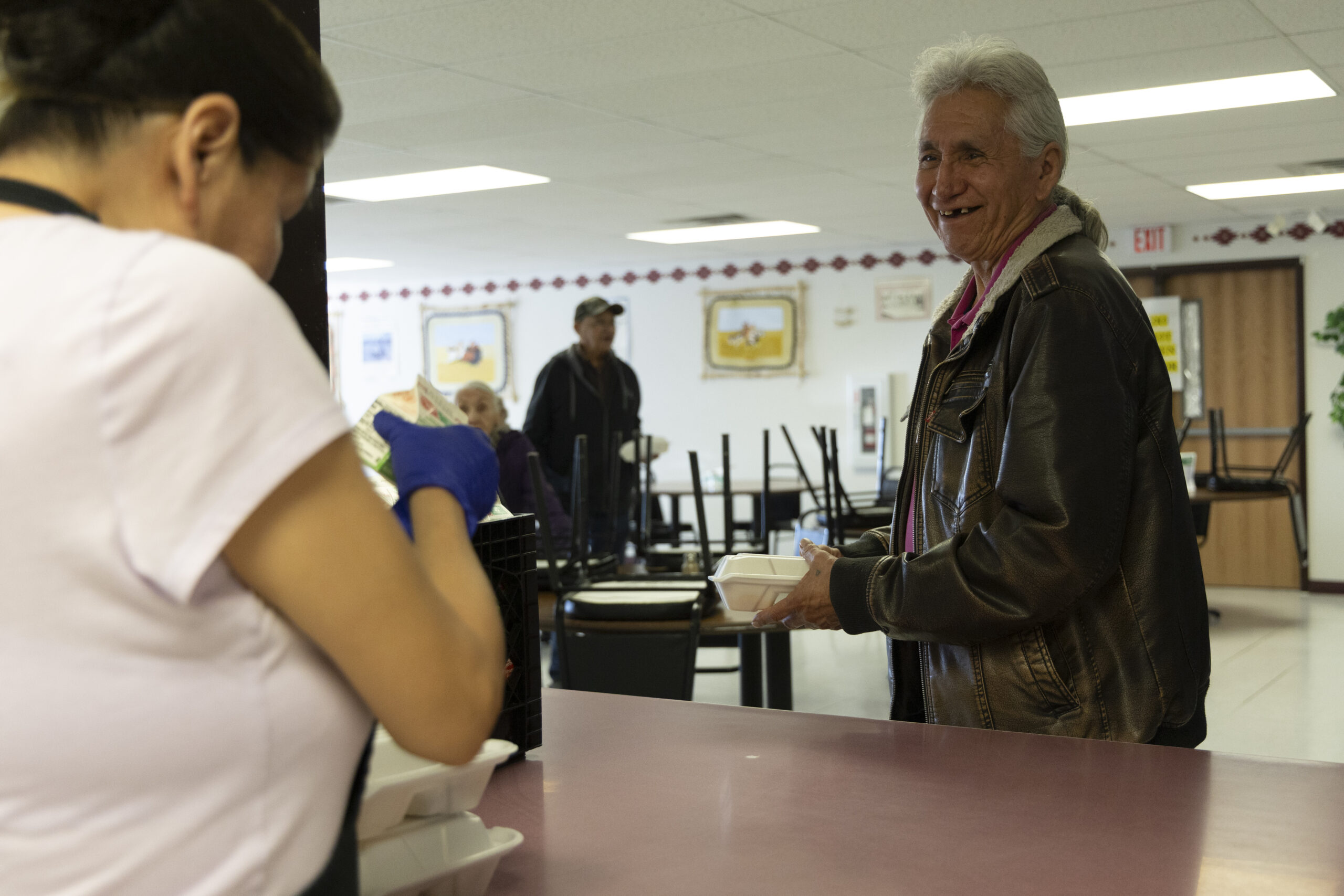
Kristi Noem, former secretary of the Department of Homeland Security, who was banned from several reservations in her home state of South Dakota, repeatedly denied that tribal citizens were being detained by immigration officials. But reporting from ICT, formerly known as Indian Country Today, stated it has “collected accounts of several Native people being detained by ICE with documentation” and tribal leaders have refuted Noem’s assertion.
Edward Kennedy, an Aamskapi Pikuni business owner, has felt the impacts of increased border scrutiny firsthand.
His partner was going to move to the U.S. until policies began to change in the states. Instead, she’s been crossing down to visit when she can, a process which Kennedy said used to take five minutes and now takes at least 30.
“You say one thing wrong and you’re toast,” Kennedy said.
Port data from the U.S. Bureau of Transportation shows that personal vehicles crossing from Canada into the U.S. at the top five ports have decreased by nearly 19% from 2024 to 2025 with the biggest decrease, nearly a quarter, from the Blaine border crossing in Washington. The Blaine crossing is near several U.S. and Canadian tribal lands, most notably the Semiahmoo Indian Reserve in British Columbia, which is less than three miles from the border.
But the increasing scrutiny at the border is only one small part of the larger impacts that the Trump administration is inflicting, Kennedy said. As a sovereign nation, the Aamskapi Pikuni people have their own relationship to Canada, one that is being damaged by the administration.
“It’s going to take a generation to fix,” Kennedy said, adding that his tribe is resilient and has adapted throughout history.
“We’ve been fighting for 18,000 years,” he said. “This is just another challenge.”
‘This big portfolio of who I am, where I’m from’
The buzz of the vending machine filled the undisturbed air. Fluorescent lights flickered above at the enrollment office in Browning during a quiet March day.
People slowly meandered in and out of the office, going in the tan door with a stack of papers and back out with a newly minted identification card in hand.
Carrying proper ID has become the first line of defense for interacting with federal immigration agents, both a top-down recommendation and a personal protection that many both on and off the reservation have adopted.
“That’s the kind of mentality that both sides of the border are thinking,” Tyson Running Wolf said. “That I got to be carrying this big portfolio of who I am, where I’m from, and, if I’m allowed to be traveling.”
But getting this documentation can be challenging. The tribe requires proof of at least one-fourth degree of Aamskapi Pikuni blood and individuals must be approved by the tribe’s enrollment office before becoming a member. Those who don’t qualify for full enrollment but have Aamskapi Pikuni ancestry can be descendency enrolled and receive a tribal ID. Descendants can’t vote or receive other benefits that full enrollment grants.
Locating the proper historical records for enrollment to prove lineage, such as birth certificates or marriage licenses, can be a complicated maze. Cost is another factor, so is transportation across remote plains.
Frank Jordan is one of the people who blew into the office. He’s on his third descendancy ID since 2024, heading in on the bleary Monday because he recently lost his wallet. Jordan got his ID for $10.
The cost? “No problem,” he said. But it’s the transportation to the office that can be harder to come by. He, alongside his friend Charlene Old Chief, were dropped off in their friend’s silver Chevy. Old Chief also recently lost her ID.
‘This big portfolio of who I am, where I’m from’
Enlarge

The idea of ICE in Montana doesn’t bother Jordan, but Old Chief has made sure to keep her ID on her since immigration enforcement across the country started ramping up. “It’s a good idea to have,” she said, tucking the pair’s cards into her jacket pocket.
Only about half of the more than 17,000 enrolled Aamskapi Pikuni members live on the reservation, with a little over 8,100 scattered worldwide — including in Minnesota, where many tribal members became fearful after ICE raids in February led to the fatal shootings of two American citizens.
While now, things seem to have slowed at the enrollment office, the place was a hectic flurry only a few months before.
The office received around 2,000 requests to update enrollment, get paperwork or get IDs in the month after ICE arrived in the Twin Cities. It took the office two months to get through the backlog of enrollment requests, said Misty Hall, director of enrollment. Most of these requests came from people living off the reservation or who were planning on traveling.
In the year prior, the tribe had made changes in procedures to make the process easier, in part to respond to people’s unease over immigration. Instead of making people travel to the office in person, the council allowed people to send in their information and receive their IDs by mail. It also offered free IDs for the month of January, leading to a large uptick of in-person requests.
Not everyone who wanted their enrollment updated was because of the national news, but Hall said she received several phone calls from people living in Minnesota who were worried. Peggy Harwood, who came in to renew her own ID, remembers phoning her youngest son down in Arizona this winter and finding out he and his son didn’t have their tribal IDs. Panicked, she demanded they get them.
Enlarge

For the 73-year-old, ICE coming to Browning isn’t a matter of if, but when.
“How long until they do?” she asked.
The Blackfeet Tribal Business Council has also grappled with this question, having conversations over the last year to make a plan.
Chairman Rodney Gervais said the tribal council met with Kurt Alme, former U.S. attorney for the District of Montana and current Republican front-runner for U.S. Senate, to discuss what ICE enforcement may look like. If immigration officials entered the reservation, Gervais said tribal councilors would initiate a call with the tribe’s law enforcement and federal border patrol, who Gervais said the tribe has a good relationship with. Alme told the council they would only communicate with the tribe if there were issues of human or drug trafficking, Gervais said.
A few tribes have already taken action, including the Oglala Sioux Tribal Council which banned ICE from entering the Pine Ridge Indian Reservation in South Dakota after four of its enrolled members were detained in Minneapolis. Several other tribes have placed restrictions on how ICE can enter their reservations.
Enlarge

Other tribes who live alongside national borders have also been responding to shifts in federal policy. The Mohawk Council of Kahnawà:ke, located in southern Quebec, issued statements reasserting their crossing rights under the Jay Treaty. The Tohono O’odham Nation in Arizona has openly opposed Trump’s efforts to build a wall along the U.S.-Mexico border, which tribal leaders said would effectively slice the tribe’s lands in half.
On April 30, Congress passed funding for the Department of Homeland Security after a record-long 76 day freeze. The bill restored funds to most agencies under the department, except for those related to immigration enforcement. Congressional Republicans are still working to enact billions in funding for immigration and border patrol.
Many tribal members remain in limbo, anxious to see what might happen. Other tribal members are comfortable, traveling without apprehension. But most seem to agree on one thing: the Aamskapi Pikuni people have existed long before this administration, and they’ll exist long afterward too.
“We’re Blackfeet. We’re Southern Piegan. We’re very adaptable,” Kennedy said. “We’ve had adversity that we’ve survived. This is just another challenge. Not a block, just a challenge.”
A SPECIAL PROJECT BY THE UNIVERSITY OF MONTANA SCHOOL OF JOURNALISM
ADDITIONAL FUNDING SUPPORT FROM THE GREATER MONTANA FOUNDATION
READ MORE:
Previous
South of the Pipeline
Next
A Fresh Foundation