Culture, connection and care
How the Little Shell Tribe’s cultural program is working for the future
Story by Bee Reiswig | Photos by Casandra Evans
The building doesn’t look homey, at first. Its corrugated metal is sky blue, and there isn’t much natural light. It sits on the edge of Great Falls and looks more like a storage building than anything else.
Even upon first entrance, the cold, smooth concrete floor takes a second to get used to. But there is laughter and chatter as people happily eat their macaroni soup. The space is filled with warmth.
The meal has been cooked by Kathy Fenner, the coordinator for the Little Shell Tribe of Chippewa Indians elder’s lunch program for about two years. She took over after the previous coordinator had been struggling with the program for about a year or so. At the time, when Fenner stepped in, about five or six people would come in per luncheon.
Enlarge
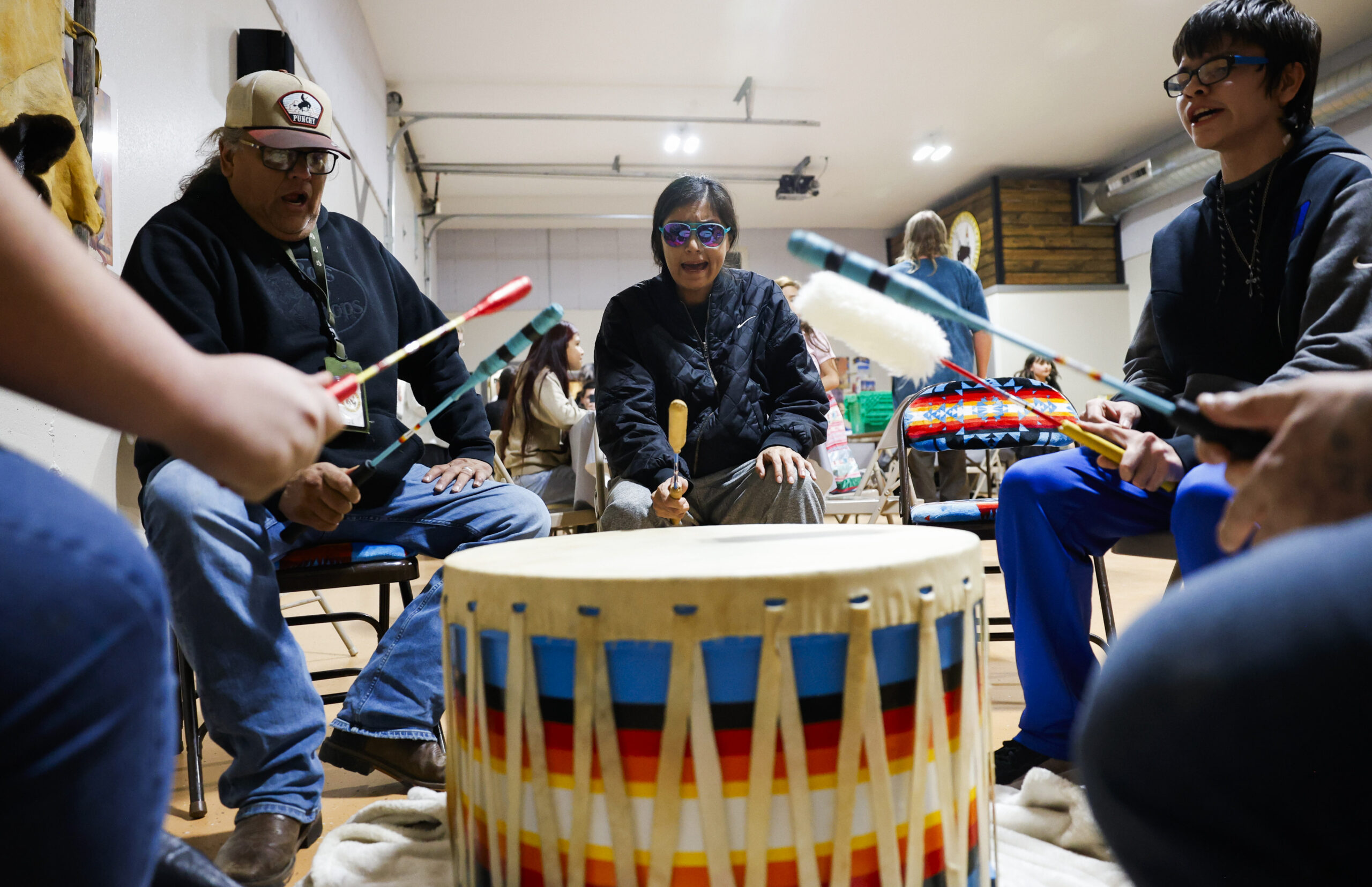
In March, there were around 10 times that many, a now common turnout for the weekly event.
“I love it,” Fenner said. “It makes me feel good to see them out there, so happy. If you’ve got someone out there who doesn’t know anyone, it’s not long before someone makes them feel at home.”
The elder’s lunches are one of many projects run through the Little Shell Chippewa Tribe Cultural Center. Though it’s been around for about five years, within the last year-and-a-half it’s worked to hold more events under the leadership of Jesse Eagle Speaker.
It’s one of the ways the Little Shell Tribe is working to build community, which can be difficult for a tribe with no reservation. Its goal remains the same: Bring the diasporic tribe together and keep its culture alive for future citizens to come, even if lack of federal support for the recently federally recognized tribe makes it difficult to do so.
The Little Shell Tribe was federally recognized in 2019 after centuries of struggle against the U.S. government. Though it was acknowledged as a tribal nation by the state of Montana in the 2000s, federal recognition allowed the tribe to access more funding and grants. However, up to that point, the Little Shell had evolved for decades with no land base, no reservation where its citizens lived, shared and maintained culture.
Enlarge
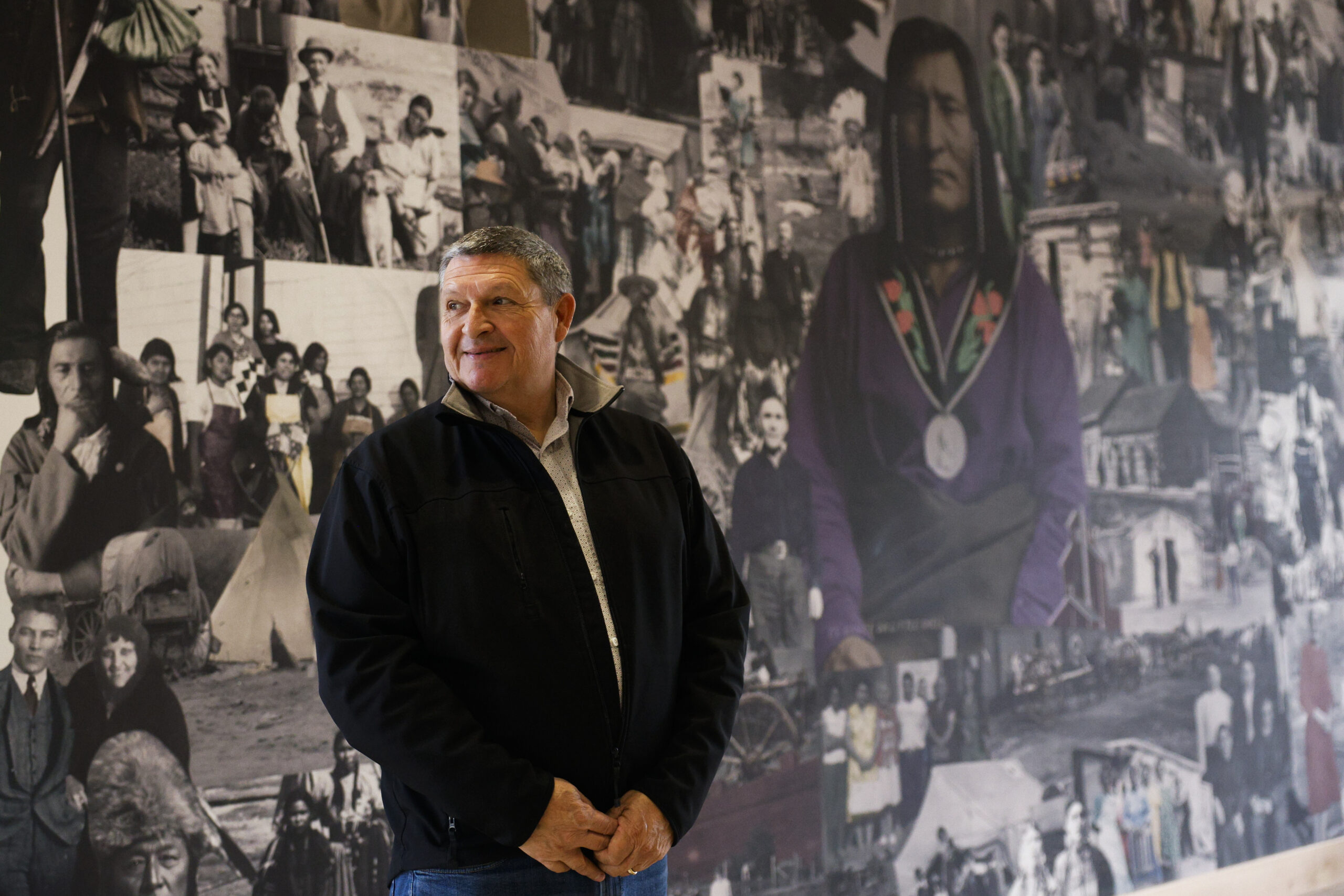
Many Little Shell citizens reside in Great Falls, but numerous have spread across Montana and the nation. This can make it difficult to maintain cultural connection.
“That has caused us to almost lose our language and culture and traditions,” Little Shell Chairman Gerald Gray said. “So that’s why we’re trying to work to bring those back. And that’s hard.”
Cultural Night, a bimonthly event thrown by the cultural program, is one of the ways in which the Little Shell Tribe is working to share its culture with its citizens.
One of the attendees of Cultural Night was shy but excited 10-year-old Mikenzie Azure. She arrived with her mom, Callie Parr. The two were mini-celebrities of the event: They’d driven two hours and 19 minutes from their hometown, Butte, in order to be there. And they drove back right after the event. But to Parr, it’s worth it.
“You really can’t explain it,” Parr said. “The sense of belonging is pretty incredible.”
Parr said she felt very disconnected from the Little Shell Tribe while growing up. She’d been meaning to attend a Cultural Night for a while, after seeing the tribe post online about the events. That night, she finally made it a priority.
Now seven years into recovery, Parr “fully credits getting sober to finding [her] culture.” Midway through her first Cultural Night, she started sobbing, overwhelmed by emotion. She’s especially excited to share the culture with her daughter.
“This is where it’s at. This is our future,” Parr said. “I grew up disconnected, and I want to do everything I can to make sure she doesn’t experience that.”
The two were eager to attend again.
Enlarge

According to Gray, the Little Shell Tribe has struggled with nitpicking cultural learning. In its language program, Gray said citizens are concerned about whether they are learning proper Ojibwe dialects.
“You get a lot of people that are like, ‘I’m more Indian than you are’ kind of attitude,” Gray said. “No, it doesn’t work like that. People are sick and tired of that.”
The tribe is currently working to put out a language learning app, which will hopefully launch in July. Though the program started with in-person classes, turnout for adults and high school students was low and the tribe needed to pivot to another form of education. The work is funded through the Montana Indian Language Preservation Program, which provided $187,500 to each Montana tribe in 2024.
According to Shawn Loewen, a professor of Second Language Studies at Michigan State University, while apps can be effective for learning vocabulary and phrases, it’s often not as effective for spoken ability. Communicative proficiency is often better built from person-to-person dialogue.
Some of the Little Shell Tribe’s funding comes from state grants, such as for the language program, as well as economic enterprises. The tribe has had to re-budget due to federal money shrinking, luckily avoiding any programs being completely cut. It is allotted $480,000 per year from the Bureau of Indian Affairs, less than $70 per tribal citizen.
“We don’t have a lot of federal grants that would be taken away,” Gray said. “A lot of the other tribes, they’ve really affected them, and mostly in education.”
President Donald Trump’s current budget for 2027 proposes billions of dollars in cuts to housing, business and infrastructure grants that support Indigenous people. Similar cuts were proposed in 2026, according to Tribal Business News, but Congress rejected it.
Although Barbara Middle Rider, who enjoys many projects run through the cultural program, said she’d like to see more programs aimed toward Little Shell adults.
Enlarge

“They seem to have more for children, which by all rights that’s a great thing,” Middle Rider said. “But because the Little Shell has gotten recognition so late in its lifetime, you’ve got a lot of adults that have no idea about some of their culture.”
Middle Rider makes an effort to attend many of the programs put on by the tribal government, such as the elder’s lunches and a new women’s group hosted by the Little Shell Health Clinic. Recently retired, she has a little more time to fit the events into her schedule. Her late husband and his family were traditional Blackfeet citizens, so Middle Rider learned a great deal about Blackfeet culture.
It’s been harder for her to learn about the Little Shell Tribe’s culture.
“Our people, the Little Shell, were kind of lost in our way, they called us ‘garbage-can Indians,’ ‘landless Indians,’” Middle Rider said about white people in Great Falls. “We lost a lot of our culture. We assimilated because we were taught that we would be looked down on. We lost the best of both worlds. I’ve been looked down on by non-Indians and Indians.”
The Little Shell Tribe of Chippewa Indians Restoration Act, signed officially by President Trump in December 2019, provided more resources for the Little Shell Tribe. Funding by the federal government, assistance from the Indian Health Services and a food distribution program are just a few benefits that came with long-due recognition. The act was slipped into the National Defense Authorization Act, which mostly focused on military spending.
Though the Little Shell Tribe has more connections with President Trump than most tribes, many still have concerns with his administration.
Enlarge
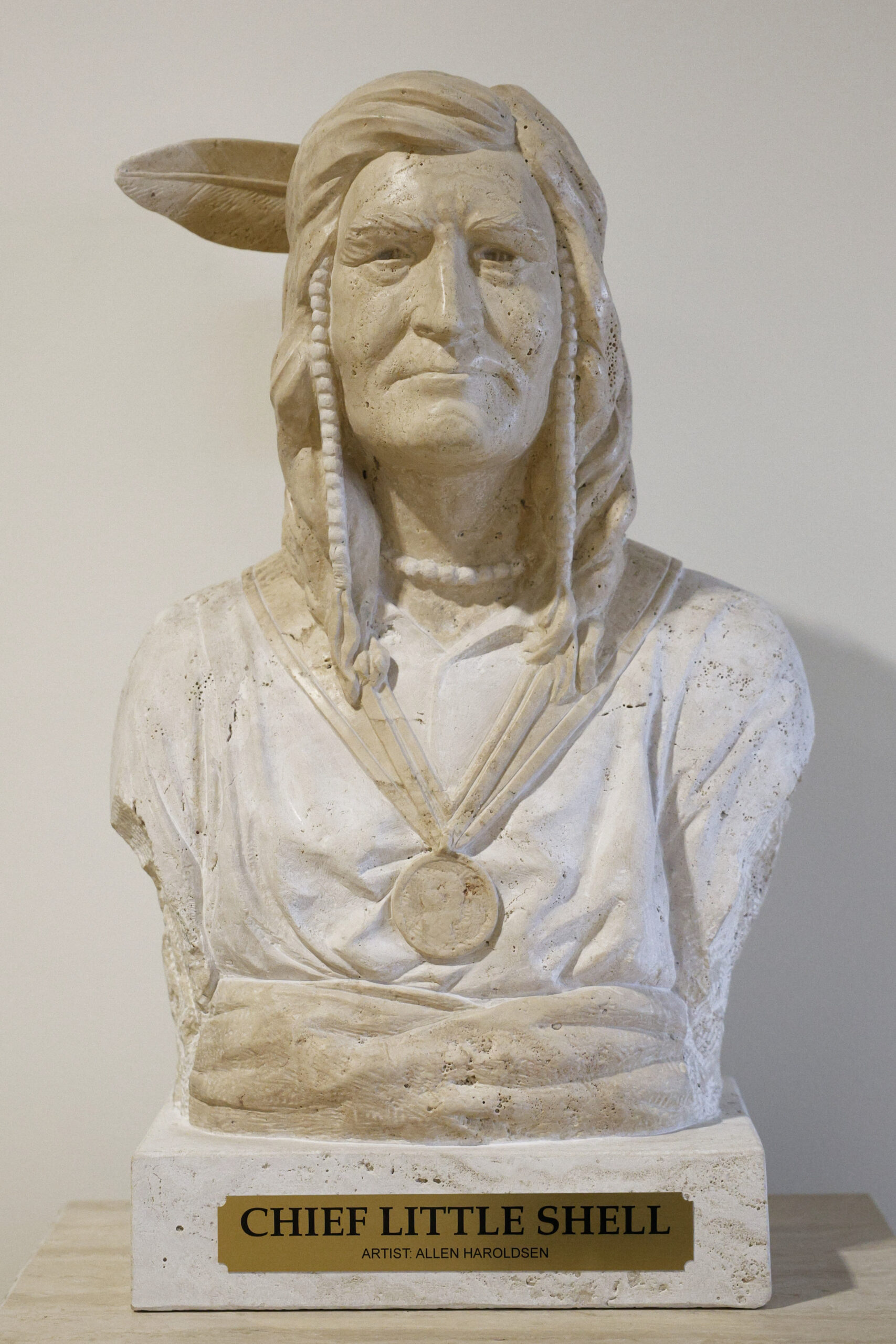
“I, truly, in my heart of hearts, believe that [President Trump] truly did not know that he gave federal recognition,” Middle Rider said. “It’s not my place to say he’s right or wrong, I just don’t like the way he comes across.”
This administration hasn’t only affected tribes monetarily. Middle Rider has noticed a change in treatment from the Great Falls community. Though she’s always been cautious, not stopping in small towns for gas, she said she noticed a shift with the new presidency.
“I see a lot more ‘Go back to the reservation. You live off the government,’” Middle Rider said. “It seems to me to be more prevalent now because of the administration’s support of ‘If you don’t get what you’re entitled to, other people shouldn’t get what you think they are not entitled to.’”
But, Middle Rider said, she does her best to not let run-ins ruin her day. She doesn’t travel much and tries to take advantage of as many of the Little Shell’s programs as she can.
To support its government, the Little Shell Tribe has found many other ventures from which to make money. It owns two of three national travertine quarries. Travertine is a type of sedimentary limestone often used as flooring, especially near pools. It doesn’t turn slippery when wet.
John Gilbert, a former Little Shell chairman and frequenter of elder’s lunches, has a friendly, deep voice and firm handshake. He’s eager to see the Little Shell continue expanding economically.
“Every governor I’ve seen, I said, ‘Someday, Little Shell is going to be an economic powerhouse in this state,’” Gilbert said. “And we will be. We’re just getting started.”
One of the Little Shell’s other economic endeavors, which supports the elder’s lunches among other tribal needs, is a group of 10 office spaces that the tribe rents out in its programs building. That’s where the cultural program is housed, it’s funded through the state’s Healing and Ending Addiction through Recovery and Treatment grant, which provided $62,500 to each of the Montana tribes in the 2024 fiscal year. According to the grant’s initiative report, the money is to be used “to fill gaps” for drug prevention and mental health promotion.
Enlarge

Many tribes, including the Little Shell, used this money to build cultural and community programs, which “research shows is protective against mental health and substance use disorders,” according to the grant’s initiative report.
“Every program that’s out there, what we’re doing, is for the future generations,” Gilbert said. “We want our younger tribal members to get involved and be proud of their heritage, and you never know who could be the next chairman that comes out of there in the future.”
Lack of federal funding does make it difficult to maintain programs. Chairman Gray explained that with less than $70 per citizen from the federal government, it would be “impossible” to maintain the amount of programming and services that the tribe provides.
“Here I have on my wall, I have a picture of President Trump and our chairman,” Gilbert said. “[Trump] got all the publicity, but he hasn’t put forth what we need for funding. And that’s typical politics, that’s what that is. It upsets me.”
Gilbert is one of many who benefit from current programs like the elder’s lunch, which is run by Kathy Fenner and her husband, Jeffrey.
“This is my fun job,” said Jeffrey Fenner, who also works once a week at Home Depot. “This is the best day of the week. Just to have them come in, enjoy the company, enjoy the food.”
The two run the weekly get-together with their daughter, Amanda Cavallin. She also works in the Enrollment Office for the Little Shell Tribe. The position came after she had been helping her mother with the cooking, and she is paid to help at the Elders Center on Wednesdays.
One of her responsibilities is to prepare the bread, it’s almost always homemade. Those coming to enjoy the food will sometimes complain if it’s store-bought. It’s a multigenerational skill, one that Cavallin and her four sisters learned from her mother, and that Fenner learned from her aunt.
The bread is mixed by hand. Cavallin typically makes four quadruple batches, a process that takes several hours. It may take a variety of forms, for example, frybread or bannock. Bannock is a dense, sweet bread that could be compared to cornbread. The slight tang and buttery flavor put it a step above, however. It’s traditional among many tribes, including the Little Shell, and it’s one that brings elders in, according to Cavallin.
Despite the length of the process, it’s one that the family is glad to do.
“I love them,” Cavallin said of the elders. “And I love that they love our food, so I’m happy to do that for them.”
The food is a hit, clearly. The tables set up in the middle of the Elders Center are mostly filled, folks slightly clumped up into large conversation groups. Even those who work slowly through their meal, enjoying the exchanges between community members, leave nothing but crumbs. And, if they’re lucky, the last few are able to bring home leftovers.
Enlarge

“I think a couple of them got clever,” Fenner said with a smile. “They’ll come later and stay and talk and talk.”
As desserts and frybread are packed to go and the last stragglers make their way out, the family behind the scenes wraps up their seven-hour shift, not counting their preparations the day prior. Whether making macaroni soup or cleaning up the last of the disposable bowls, Fenner does her work with focus and without complaint.
“Even one meal helps [elders] know they’re appreciated,” Fenner said.
Though it would be great to have the event more than once per week, the budget won’t allow it. That’s part of the work of the tribe itself: Finding the funds that have to be available to create these opportunities.
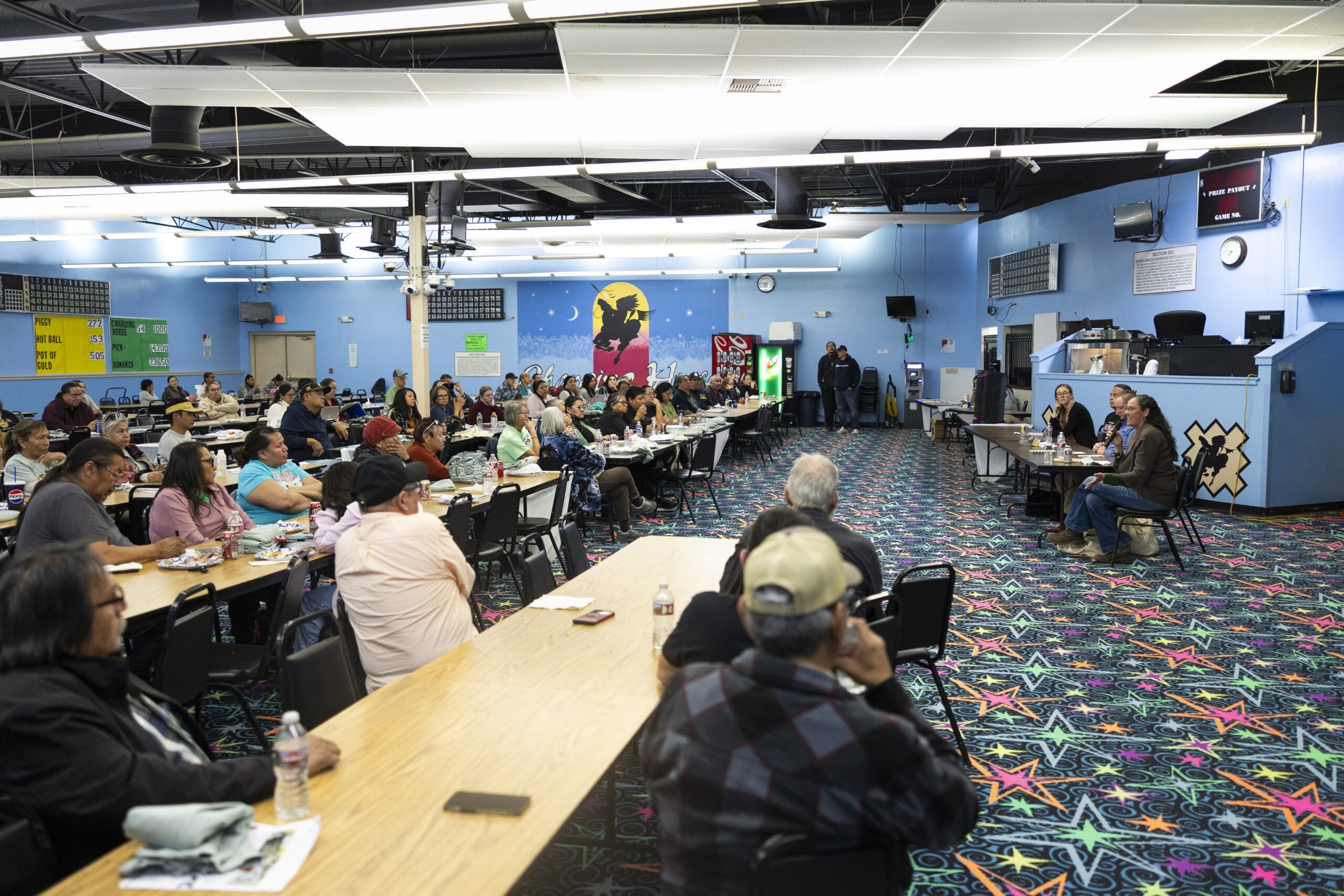
The little blue building is one that serves many purposes for the Little Shell Tribe. The new Cultural Center will spread the weight of events more evenly, but as of March, last-minute flourishes on the building mean the Elders Center served 60 elders one moment, and around 30 community members a few hours later.
Every other Wednesday, the program hosts Cultural Night. On March 11, the focus was on braiding sweetgrass. The environment is equally as warm as the elder’s lunch, but a little more subdued. Quiet, joyful chatter echoes in the space.
There’s a complete openness to every part of the event that allows everyone in attendance to feel welcome.
“Anyone that comes in and participates becomes part of us as our family,” said Jesse Eagle Speaker, who runs the cultural program. “Even if you don’t come from us, the door’s open, and we’ll help you.”
Even those who have lived in the area for most of their lives, like Dorothy Langan, are prepared to learn more about their culture.
Langan grew up on Hill 57 in a big family. She later married a man from Rocky Boy — her first marriage — and felt out of place not knowing a lot about the traditions or culture of the tribe. Her mother-in-law would later teach her how to bead, and Langan, in turn, taught her own mother.
“That’s why we come to this stuff, because we are actually learning how to be in it,” Langan said. “We are actually learning our own traditions, which we just never did.”
She, alongside the rest of the happy-go-lucky crew, begin braiding sweetgrass under the tutelage of Eagle Speaker after receiving their bundle of grass from Tricia Russette, who runs the Community Health program.
“Remember when you’re braiding this sweetgrass, you think about your family,” Eagle Speaker said. “Pray for them when you’re doing this. That’s extra strength for them.”
He takes a moment, then jokes: “Tricia is going to do the first 24 braids.” Russette plays along, forcing a quieter attendee into this imaginary work with her. The room feels playful, welcoming.
Enlarge

To begin, Langan separates a smaller section of the grass and wraps it around the end a few times, maybe an inch down from the top. The long end of that grass joins into one of the three sections that will become the braid.
With the sweet flavor of the grass in her mouth, texturally close to shredded celery, and water dripping from the end, Langan braids tightly. To make an even, pretty braid, it’s crucial to make the three sections relatively even and to keep a consistent tension throughout the weaving. Langan is helped by the fact that she’s a beautician.
Once reaching the end, Eagle Speaker says to twist the thin end enough that it becomes akin to a rope. By tying it in a knot, the braid concludes and is ready to dry, awaiting the day that its owner burns it.
Though it’s certainly educational for all, there’s an angle toward children for the event. Everything is explained kindly and in terms that citizens and non-citizens, elders and children can understand alike. When there’s a hesitancy to get into the center of the room and dance, Russette suggests musical chairs. A few adults join in to help the younger in attendance get past that late-elementary-age awkwardness and participate.
With the last of the sweetgrass braided and musical chairs concluded, attendees trickle out, some with a free overflow carton of eggs from the tribe’s food program. As they do so, they ball up the unruly wisps of sweetgrass that they plucked out of the braid. The clumps of grass catch the wind and bounce their way across the parking lot together.
“It’s like that braid. There were three stands come together, made one,” Eagle Speaker said to the crowd. “That’s what we need. We don’t need division. Let’s create a safe room for our kids and our elders, so that they have somewhere to relax. They have somewhere to be proud.”
And that’s what the cultural program is striving to do.
Enlarge

A SPECIAL PROJECT BY THE UNIVERSITY OF MONTANA SCHOOL OF JOURNALISM
ADDITIONAL FUNDING SUPPORT FROM THE GREATER MONTANA FOUNDATION
READ MORE:
Previous
Facing the nuclear renaissance
